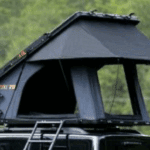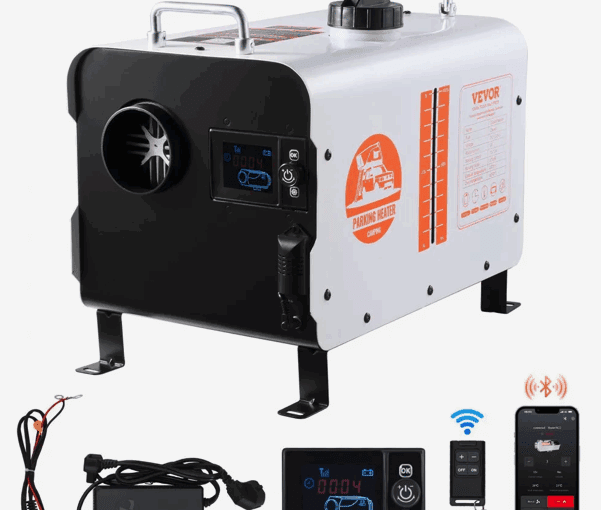
Diesel heaters for campers have gone from niche van-life gear to standard winter kit for rooftop tents, truck canopies and small campers. In 2025, the big shift isn’t just “diesel vs propane”, it’s about safer exhaust systems, smarter controls and units designed specifically for cold, wet Canadian conditions.
Below is a practical guide built for people searching things like “are diesel heaters safe?”, “how much diesel does a heater use per night?” or “best diesel heater for rooftop tent Canada.”
Diesel heaters vs propane heaters for camping
Are diesel heaters better than propane for camping?
For short summer trips, a propane buddy heater still works. But in a Canadian winter, diesel usually wins on four points:
- Dry heat – diesel heaters blow dry air into the tent or canopy; propane adds moisture and fogs everything up.
- All-night runtime – a few litres of diesel can run a small heater all night without swapping bottles.
- Outside install – most diesel heaters live in a box outside the tent, with warm air ducted in.
- Fuel availability – if you’re already driving a diesel truck or van, one fuel type simplifies things.
Propane still makes sense for cooking and light shoulder-season heat. For repeated sub-zero camping, diesel has become the default in most serious rigs.
Are diesel heaters safe to sleep with?
Are diesel heaters safe to use overnight in a tent, canopy or van?
When people ask this on forums, the honest answer is: they are safe if installed correctly, and risky if the exhaust is done badly. The key safety basics are the same across brands:
- Exhaust must exit fully outside and away from doors, windows and low spots under the vehicle.
- Never block the exhaust with snow, slush, tarps or gear.
- Always run a carbon monoxide detector inside the sleeping area.
- Use proper clamps, gaskets and high-temperature hose, replace thin, rusty or damaged parts.
- Follow the manufacturer’s install manual; don’t improvise with random plumbing fittings.
Most modern portable heaters from reputable brands add overheat protection, low-voltage cut-off and short-circuit protection on top of that.
How much diesel does a heater use per night?
How much diesel does a 2 kW or 5 kW heater burn?
Real-world numbers are lower than most people expect:
- 2 kW heaters typically burn around 0.10–0.24 L per hour.
- 4–5 kW heaters can use up to 0.55 L per hour on high.
So an 8-hour night for a 2 kW unit can be roughly 1–2 litres, and a 10 L tank can last multiple nights if you’re not running full power. A 5 kW running hard in very cold temps will obviously use more, but it still stays manageable for weekend trips.
For most rooftop tent and canopy setups in BC and Alberta, a 2–4 kW heater plus a 5–10 L tank covers typical weekend use.
What size diesel heater do I need for a rooftop tent or truck canopy?
What size diesel heater is best for an RTT or truck bed setup?
The simple sizing rule for camping:
- 2 kW – rooftop tents, truck canopies, small ground tents and compact vans
- 4–5 kW – larger campers, canvas wall tents, poor insulation, or very cold mountain trips
- 8 kW – only if you’re heating a large wall tent or splitting air to multiple spaces
Many budget “5 kW” and “8 kW” heaters are re-labelled versions of the same core unit, so it’s better to pick by real use-case (RTT vs big tent) and supplier reputation than by the number on the sticker.
Portable diesel heater vs fixed install
Should I buy a portable diesel heater or a fixed Webasto/Espar-style system?
There are now three clear paths:
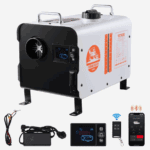
- Portable box heaters – all-in-one units or Canadian-built boxes you keep outside the tent and duct in warm air. Easy to move between vehicles, great for RTTs and truck canopies.
- DIY kits – heaters and parts sold as van/RV kits; you build a semi-permanent install under a seat or in a cabinet.
- Premium fixed systems (Webasto, Espar, Autoterm/Planar) – the quietest, most reliable choice for vans, expedition trucks and boats. Higher price, but parts and support are widely available in Canada.
If you’re mainly heating a rooftop tent or truck canopy and want something you can store in the garage in summer, a portable box heater is usually the best fit.
Diesel heater prices in Canada
How much does a diesel heater cost in Canada in 2025?
Looking across Canadian retailers and overseas shops:
- $150–$300 CAD – entry-level all-in-one boxes (Amazon/VEVOR style)
- $350–$700 CAD – better-built portable heaters from Canadian brands and overland shops
- $1,400–$2,300+ CAD – premium Webasto / Espar / Autoterm kits with full support
For most RTT and truck-bed setups, that middle band is the sweet spot: portable, purpose-built, and backed by a Canadian shop if something goes wrong.
Basic diesel heater maintenance for campers
How do you maintain a diesel heater for camping?
A few simple habits make a big difference in reliability:
- Run the heater on high for 15–20 minutes at the end of a trip to burn off soot.
- Keep the fuel clean, use decent diesel, avoid water in the tank, and don’t leave fuel sitting for multiple seasons.
- Check exhaust hardware every few trips for loose clamps, damage or corrosion.
- Store portable box heaters somewhere dry and dust-free between seasons.
- Carry a spare fuse and glow plug if you’re relying on it for remote winter trips.
Most reputable systems are designed to run for hundreds or thousands of hours; small maintenance steps just help them get there.
Quick picks by use case
What diesel heater should I get for my setup?
- Rooftop tent / truck canopy / weekend trips
→ 2–4 kW portable diesel heater in a weatherproof box outside the tent. - Van build / full winter use / ski-lot camping
→ Fixed Webasto / Espar / Autoterm kit sized to the interior volume. - Budget trial of winter camping
→ Entry-level portable heater, plus a CO detector and upgraded exhaust hardware.
Diesel heaters for Kermode Overlanding – Coming Soon…
If you’re looking for a diesel heater for a rooftop tent or truck canopy in Canada, that’s exactly what we’re working on right now.
We’re currently testing a compact, portable diesel heater tuned for:
- rooftop tents and annex rooms,
- truck canopies and small campers, and
- wet, coastal winters and interior cold snaps here in BC.
Stock will be based on Vancouver Island with FREE shipping across Canada & USA once testing is complete.
To stay in the loop or ask what size makes sense for your setup, you can reach us at 1-250-740-1844.