
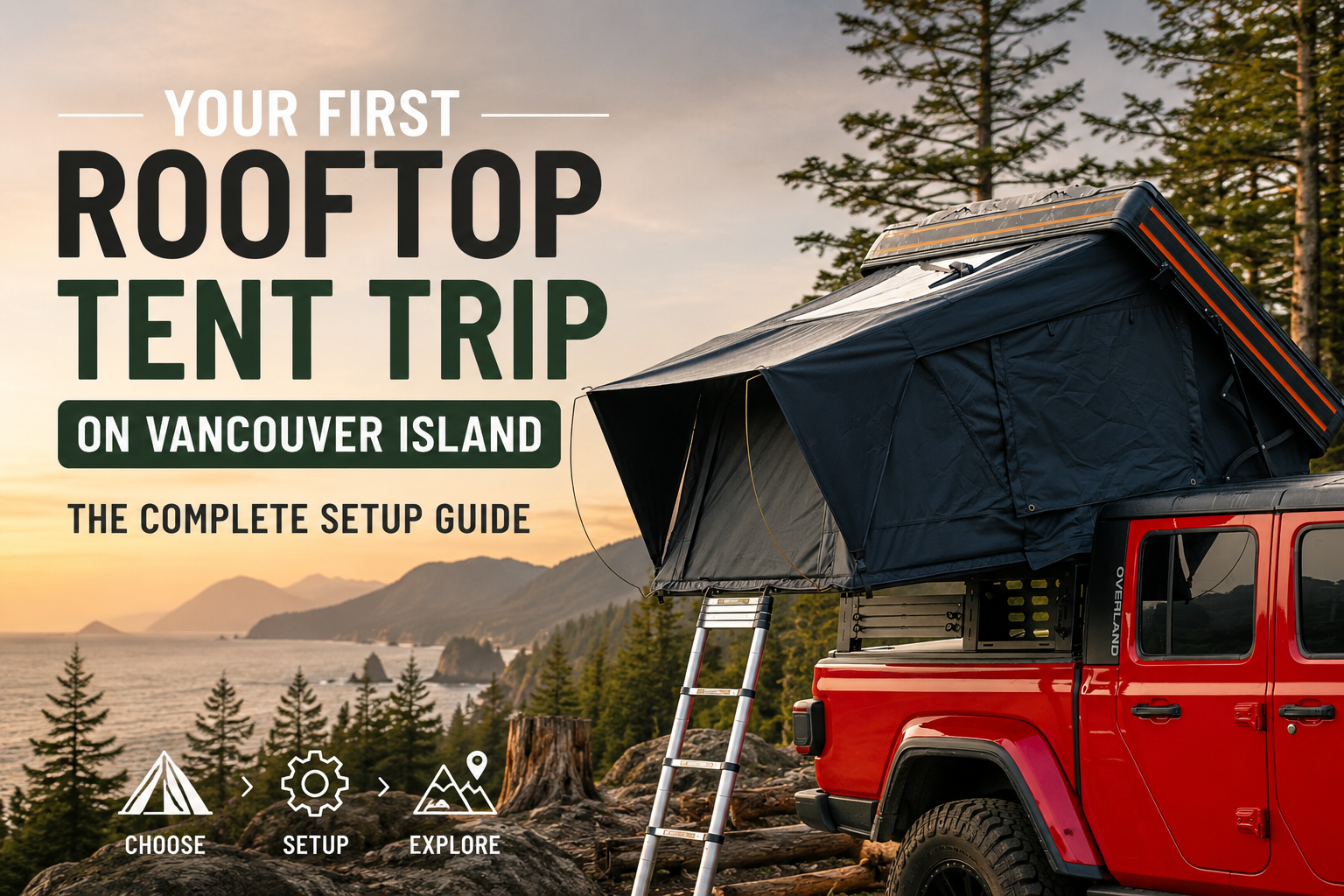
If you’ve tried to book a campsite on Vancouver Island in the past five years, you already know the punchline. Rathtrevor, Englishman River, and Miracle Beach are gone months before peak weekends. West coast sites near Tofino book out by January. The rest are first-come, and from May through September on a Friday afternoon, the line forms before noon.
There’s a way around the race entirely. It starts with not needing a campsite.
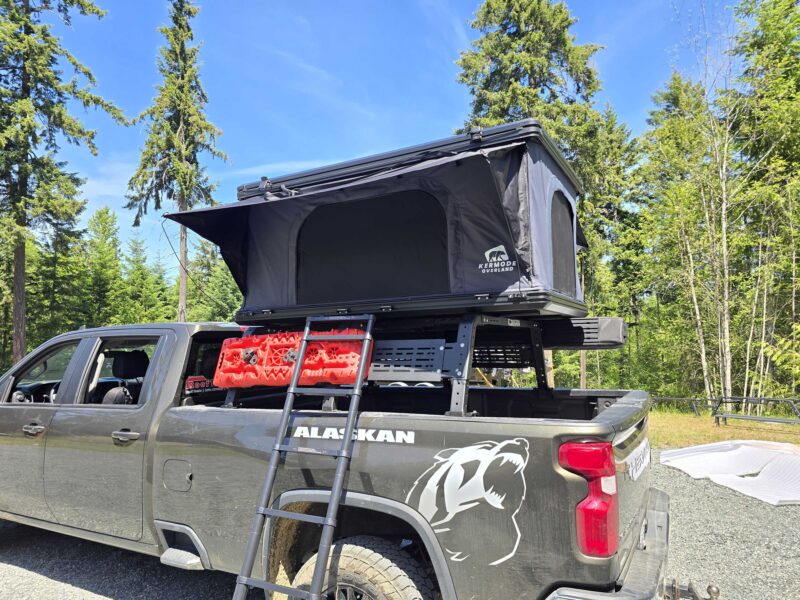
A rooftop tent turns any forest service road, gravel pullout, or beach access into a place to sleep. You stop where the day ends. No reservation, no $40 site fee, no neighbour’s generator running into the night. For Vancouver Island specifically, where Crown land is everywhere and FSRs lace the spine of the Island, this kind of setup makes more sense than almost anywhere else in Canada.
This is the practical guide for your first trip. What to bring, where to go, what Island weather actually does to your gear, and how to get sorted before you leave the driveway.
Why Vancouver Island Is the Right Place for Your First Rooftop Tent Trip
Most rooftop tent owners on the Island fall into two camps. The first bought one last summer and treats every weekend it doesn’t rain as a campout. The second mounted theirs last month and is still figuring out where to take it.
Wherever you fit, the Island is the right answer for a first trip — and it’s the right answer in any season.
You’re never more than two hours from a town. If something on your setup fails — a torn rain fly, a forgotten pole, a flat tire that needs a real shop — civilization is close. That isn’t true once you’re three days deep into the Yukon. The Island is forgiving in a way that matters when you’re still learning how your rig behaves.
The terrain variety is hard to beat. Beach, old-growth rainforest, alpine, lake shore, gravel road, paved highway access points — all within a single weekend if you want them. You find out what conditions your setup actually handles best.
FSR access is everywhere. The Island is laced with active and decommissioned logging roads, most with pullouts within 30 minutes of any town. You can stretch into remote terrain or stay close, depending on what you’re confident running.
The timing window is also wide. People rooftop tent camp on Vancouver Island year-round. Spring is cool and damp but trails are empty. Summer is peak. September is arguably the best month for stable weather and quiet backroads. Winter is real winter camping for the prepared, with snow at elevation and consistent rain at sea level. Your first trip can happen any month — the gear just has to match the season.
The thing a first trip needs is a low-stakes shakedown. Use any weekend that fits. If it rains, you find out whether your rain fly seals. If it gets cold, you find out whether your bag is rated honestly. If something on your rack rattles loose at 100 km/h on the Inland Island Highway, better to find that out two hours from home than at the end of a 60-kilometre FSR.
5 Vancouver Island Camping Spots That Don’t Need a Reservation
These are the kinds of places a rooftop tent unlocks. Some are designated Recreation Sites (free, first-come), some are random FSR pullouts, and a few are overland pulloffs experienced Island campers have used for years. None require booking ahead.
Conditions change constantly. Verify access before you commit. Active logging closes roads. Snowmelt and storms wash out culverts. A site open last year might be gated this year.
1. Port Renfrew and the Pacific Marine Road Pullouts
Pacific Marine Road connects Lake Cowichan to Port Renfrew, paved most of the way, with free Rec Sites along Lizard Lake and Fairy Lake. Pullouts on the gravel sections fit a truck and awning. You’re 30 minutes from Avatar Grove, Botanical Beach, and the Juan de Fuca Trail. For a first rooftop tent trip, this is the gentlest introduction. Cell service is patchy but exists.
2. Cowichan Valley FSRs and Lake Loops
The network off Highway 18 between Lake Cowichan and Honeymoon Bay has dozens of pullouts and lakefront spots. Honeymoon Bay Rec Site is one of the easier options. The FSRs around Mesachie Lake offer more privacy if you want to get further off the pavement. Watch for active logging on weekdays. By Friday night the trucks are off the road and you have it to yourself.
3. Strathcona Park Backroads
The park has booked campgrounds, but the Western and Eastern access routes have pullouts, FSR spurs, and trailhead parking that work overnight. Buttle Lake Road has options. The Elk River trailhead area has gravel space. This is bear country in the truest sense, so cooler discipline matters. Strathcona is one of the most spectacular places to wake up on the Island, and a rooftop tent is the easiest way to do it without scoring a reservation.
4. Hornby Island (Ferry Hop)
Hornby requires two ferries, both first-come, both lined up early on busy weekends. If you’re already committed to that hassle, the island rewards you with Tribune Bay, Helliwell Provincial Park, and quiet pullouts on the gravel roads inland. Whaling Station Bay is busy but worth it for the sunrise. Softer overland weekend, more salt air than gravel.
5. The North Island: San Joseph Bay and Side Bay
This is the deep end. San Joseph Bay sits past Holberg, accessed by active logging roads. Side Bay is further still. Both require real tire pressure, real recovery gear, and real comfort with remoteness. Cell service ends well before you arrive. If you’ve never run an FSR, this is not your first trip. If you have, there’s almost nothing in BC that compares.
What to Pack on Your Roof Rack and in Your Rig
The temptation with a new rooftop tent is to load it with everything. Resist. The whole point of overland camping is that the rig is the camp, and the camp moves with you. Pack tight, pack accessible, pack for actual conditions.
The Sleep System
Your tent already has a mattress — the single biggest comfort upgrade over ground camping. The question is what goes on top. Match your bag to the season:
- Spring and fall (March–May, September–November): 0°C comfort rating
- Summer (June–August): 5–10°C comfort rating
- Winter (December–February): –10°C comfort rating minimum
If a bag is labelled “0°C extreme,” that’s a 7°C bag for actual sleeping. Buy the comfort rating, not the marketing number.
Pillow: A real pillow. Not a stuff sack with a fleece on top.
Condensation mat: The one piece of gear most first-time RTT owners skip and immediately regret. Sits between the mattress and the tent floor, allows airflow, prevents overnight condensation from soaking the foam. On the Island, in any season, not optional.
Cooking and Water
Keep it simple. Two-burner propane stove, cast iron pan, one pot, kettle, cutting board, knife, spatula. That kit handles every meal for a long weekend.
- Water: Bring more than you think. 10 litres minimum per person for three days. Refilling is doable in towns but unreliable on FSRs.
- Cooler: A real one. 40 to 65 litre hard cooler. The difference between cold beer Sunday and warm soup Sunday.
- Food storage: Hard-sided bins, sealed. Bear country means everything edible goes back in the truck at night.
The Awning
If your rig has a tent and no awning, an unlucky weather window will involve a lot of standing in the rain. An awning extends your shelter footprint by 6 to 9 square metres and lets you cook and sit through showers without packing up the kitchen. A 270 degree gives wraparound coverage. A 180 or standard rectangle works fine for most setups. On Vancouver Island, where rain shows up most months of the year, this is one of the highest-value upgrades you can make.
Lighting, Power, and Safety
- Headlamp per person, plus an LED strip or lantern inside the tent.
- Power station: 300 to 500 Wh handles phones, lights, and a small fan for several days.
- Recovery basics: tow strap, shackles, tire plug kit, full-size spare, jack that works with your lift. Going remote? Add traction boards and a shovel.
- Bear spray, a real first aid kit, and a Garmin inReach if you’re past the cell network. North Island is past it almost everywhere.
Vancouver Island Weather: What to Expect by Season
Island weather has a few year-round constants and a few seasonal swings. Knowing both ahead of time keeps your first trip from turning into a fight with the elements.
The Year-Round Constants
Morning fog. Coastal sites, especially the west coast and the north Island, wake up soaked in clouds that don’t burn off until mid-morning. Everything outside the tent gets damp. Normal, not a sign your gear failed.
Overnight condensation. This surprises first-time RTT users. Inside a sealed tent with two warm bodies breathing for eight hours, condensation forms on the inside of the rain fly and drips down. By morning, the underside of the mattress can be visibly wet. The fix is ventilation: crack both windows 5 centimetres even when it’s cold. The condensation mat handles the rest.
Cold mornings. Even in summer, a forested pullout at 6 a.m. can be 8°C when the day’s high will be 25°C. Always have a fleece and a beanie within arm’s reach of the bed.
Spring (March–May)
Cool and damp. Daytime highs of 10 to 15°C. Snowmelt closes higher-elevation FSRs into early May. Bears are awake and hungry. Bugs are minimal. Plan for at least one wet day.
Summer (June–August)
Peak season. Daytime highs of 20 to 28°C, lows of 8 to 13°C. Wildfire season usually brings campfire bans by mid-July — confirm before you light anything. Mosquitos and no-see-ums are real on the west coast and around lakes. Bring a head net for evenings.
Fall (September–November)
Often the best season on the Island. September has stable weather, empty trails, and water temperatures still warm from summer. October flips to consistent rain and shorter days. November is full winter prep territory.
Winter (December–February)
Real winter camping. Sea-level coastal sites get steady rain and lows around 0 to 5°C. Higher elevation gets snow, sometimes a lot. FSRs into the interior of the Island are often impassable. People do winter rooftop tent trips here, but it’s not a first-trip season.
Setup and Takedown: The Boring Stuff That Matters
If it’s your first trip, practice setup in your driveway. Once. That’s all it takes to avoid fumbling it in the dark at a pullout while three other trucks watch.
Soft shells take 3 to 5 minutes once you’ve done it twice. Hard shells take under 60 seconds. The difference matters more on arrival than departure, because departure is always slower (everything’s damp, everything needs to dry before it folds).
Two habits worth building from day one. Park flat: use a spirit level app if needed, because a 5-degree slope feels like 30 when you’re sleeping with your head downhill. Most pullouts have one corner that’s flatter than the rest. Find it. Open the tent into the wind, not away from it. Wind catching the underside of the cover during deployment is how covers tear.
On takedown: air the mattress out for 20 to 30 minutes after sunrise. Wipe down inside surfaces with a microfibre towel before folding. If it’s actively raining, accept that you’ll dry the tent at home before next use — folding a wet tent invites mildew within a week.
Where to Pick Up Gear in Nanaimo Before You Go
If you’re reading this in the week before your first trip and realizing you’re missing something — awning, condensation mat, proper rack, recovery gear, a tent itself — Kermode Overland is based in Nanaimo and stocks every category covered above. Walk-in pickup, no shipping wait, fitment help included.
The pieces most people forget at the last minute, in order:
- Condensation mat (because nobody talks about it until they need one)
- Awning (because the forecast suddenly changed)
- Recovery boards (because someone showed them a TikTok of a stuck truck)
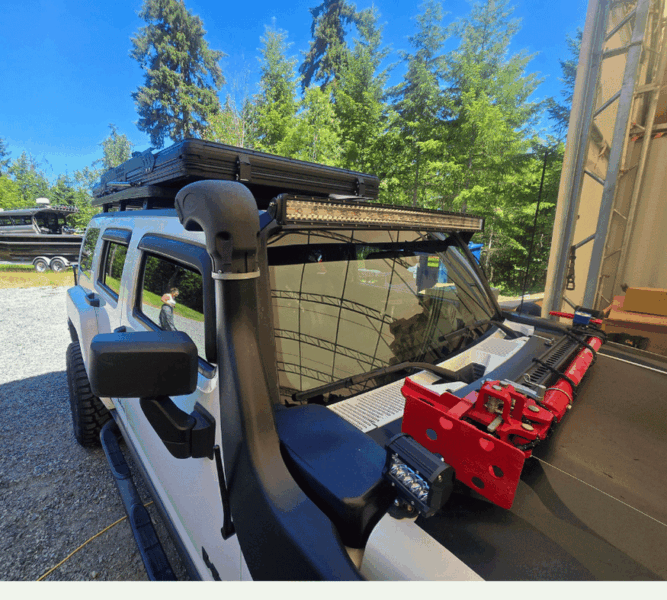
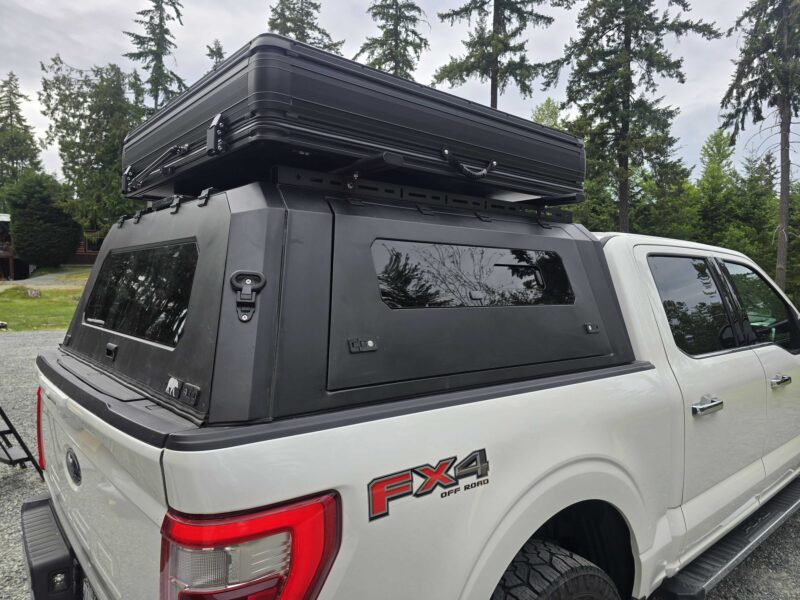
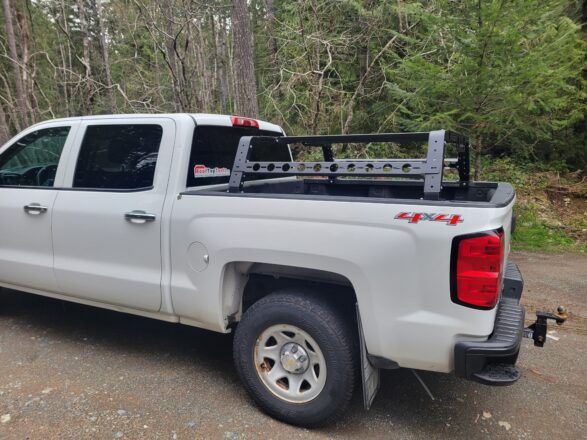
- Crossbars or roof rack (because the new tent won’t mount to factory rails)
Lead times on stocked items in Nanaimo are zero. Items shipped from suppliers, even within Canada, can take a week. If a trip is locked in for a specific weekend, the safer bet is to walk into the shop a few days ahead and leave with everything ready.
FAQ
Do I need a permit to camp on FSR pullouts in BC?
Not for most Crown land. You can camp on Crown land up to 14 days in any one location, free, as long as the area isn’t signed otherwise. Active logging roads, private timber lands, and First Nations territories have different rules. Check signage at the access point.
What month is best for a first rooftop tent trip on Vancouver Island?
September is the easiest answer — stable weather, empty trails, water still warm. June is the next best for warm days and long evenings. Spring works if you’ve packed for wet, cool conditions. Winter is possible but not a first-trip season.
How do I know if my SUV or truck can handle a rooftop tent?
Two numbers matter. Static load (parked) is usually 200 to 300 kg or more on most vehicles. Dynamic load (driving) is much lower, typically 75 to 90 kg. Most rooftop tents weigh 45 to 80 kg empty. Add two adults and gear and you can exceed dynamic load while driving, which is hard on the roof structure. The fix is a proper rack rated for the tent’s weight, mounted to factory anchor points. Any reputable overland shop will run the math for your vehicle before selling you a tent.
What if it rains the entire weekend?
You’ll be fine if your rain fly is tensioned and your awning is up. The miserable part of wet weekends isn’t sleeping (the tent stays dry), it’s cooking and hanging out. An awning solves both. Worst case, drive into Tofino or Cumberland for half a day, find a coffee shop, dry out the rig, head back.
Hard shell or soft shell for a first tent?
Soft shells are cheaper, sleep more people, and pack down smaller. Hard shells set up faster and handle wind better. For a first tent, soft shells are the more forgiving choice if budget is a factor. Hard shells are worth it if you’ll be deploying and packing daily.
Heading Out on Your First Trip?
A first rooftop tent weekend on Vancouver Island is the kind of trip you remember. The campsite race is a problem other people are solving Friday afternoon while you’re already set up at a pullout three FSRs deep, coffee on the stove, nobody around for two kilometres.
If you’re missing a piece of the kit, building your first setup, or trying to figure out whether your vehicle can handle the tent you want, Kermode Overland is in Nanaimo and stocks rooftop tents, awnings, racks, recovery gear, and storage. The shop runs on fitment knowledge, not spec sheets, and the staff have run the same FSRs and pullouts you’re heading to. Stop in before the trip, or browse the catalogue and arrange pickup.