
Overlanding Builds — Aluminum Truck Canopies
The Most Capable Platform for a Serious Truck Build
An aluminum canopy gives you enclosed lockable storage, all-weather protection, and a load-bearing roof for a rooftop tent and cross bars —
without sacrificing your truck for work during the week. Four build tiers for Tacoma, F-150, Silverado, Ranger, Gladiator, and more.
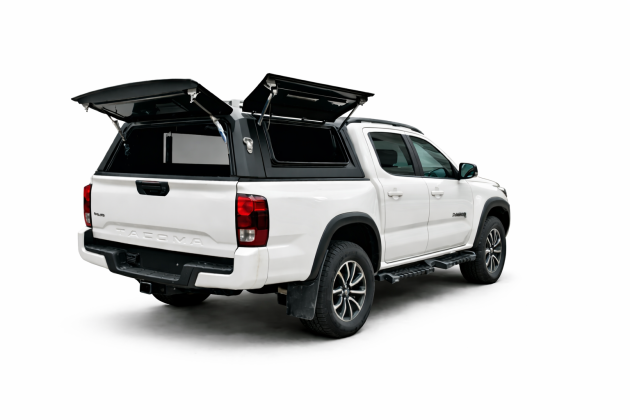
A truck bed rack opens up. A tonneau cover lies flat. An aluminum canopy does something different — it turns the truck bed into a fully enclosed, weatherproof, lockable space that functions like a utility vehicle or a workshop on wheels. That’s why canopy-based builds are so popular with tradespeople, serious overlanders, and anyone who needs their truck to do two demanding jobs without compromise.
This guide covers four aluminum canopy build tiers, from a clean starter setup to a fully loaded expedition rig. Each one includes the core components, real CAD price ranges, which trucks they fit, and what to buy first. Rooftop Tents Canada offers vehicle-specific aluminum canopies for the Tacoma, F-150, Silverado/Sierra 1500, Ranger, and Gladiator — along with matching canopy cross bars, storage cabinet accessories, rooftop tents, awnings, and everything else you’ll need.
New to canopy builds?
Choose Your Setup Tier
An aluminum canopy is a full hard-sided enclosure that fits over a truck bed — not just a cover. It has a load-bearing roof, side walls, a rear swing-out or lift gate, and often optional side access doors or windows. The roof is designed to support canopy cross bars, which then carry a rooftop tent, cargo boxes, awning mounts, and other accessories. The enclosed interior becomes a secure lockable storage space: weatherproof, dustproof, and protected from theft. Think of it as permanently upgrading your truck bed into a cargo van while keeping the roof available for overlanding gear.
- Toyota Tacoma
Ford F-150
Chevy Silverado 1500
GMC Sierra 1500
Ford Ranger
- Jeep Gladiator
Toyota Tundra
Ram 1500
Nissan Frontier
New to canopy builds?
Choose Your Setup Tier
Find your starting point here — full setup details with trucks, gear lists, and budget guidance follow below.
| Build | Best For | Key Additions | Est. Cost (CAD) |
|---|---|---|---|
|
1
Canopy + Cross Bars + Tent
|
Weekends, entry-level overland | Canopy, cross bars, tent | $4,500 – $7,500 |
|
2
Canopy + Awning + Storage
|
Longer weekends, work + adventure | + Awning, cabinet, cooler | $7,500 – $12,000 |
|
3
Full Expedition Setup
|
Remote multi-day travel | + Fridge, power, recovery | $12,000 – $20,000+ |
|
4
Work Truck + Weekend
|
Tradespeople, dual-purpose use | Cabinet-focused, rooftop optional | $4,500 – $8,500 |
Build 1 - Entry Level
Canopy + Cross Bars + Rooftop Tent
Estimated build cost: $4,500 – $7,500 CAD
Toyota Tacoma (5′ and 5’5″ beds), Ford Ranger (5′ bed), Jeep Gladiator (5′ bed). Mid-size trucks are ideal for this starter build — their shorter beds keep the overall canopy footprint manageable. Always specify bed length and cab configuration when ordering. Canopy fitment is vehicle-specific; do not assume cross-fitment between similar trucks.
What You Need
Vehicle-specific aluminum truck canopy
Canopy cross bars (canopy-rated, not standard roof bars)
Rooftop tent — hardshell preferred for weight distribution
Season-appropriate sleeping bag and pillow
Compact weatherproof storage boxes for the bed
Rechargeable camp lantern or string lights
Why It Works
- Enclosed lockable bed from day one
All-weather protection for tools and gear below
Canopy roof rated to carry tent + cross bars
Cleaner, more secure than an open bed rack
Strong upgrade path — add awning, fridge, power later
Hardshell tent opens in under 60 seconds
Build 2 — Work + Weekend
Canopy + Awning + Organized Storage
Estimated build cost: $7,500 – $12,000 CAD
Ford F-150 (5.5′ and 6.5′ beds), Chevy Silverado 1500, GMC Sierra 1500, Toyota Tacoma (all trims). Full-size trucks are ideal for this tier — the longer bed gives you meaningful cabinet depth and interior storage volume, and the higher payload handles a canopy, cabinet, and awning without issue. Check payload before adding heavy storage cabinet systems.
- Aluminum truck canopy
Canopy cross bars
Rooftop tent (2–3 person)
Side-mount awning (270° or full-side)
Storage cabinet or drawer system for bed interior
Portable fridge or quality hard cooler
Camp lighting mounted to canopy or awning
- Cabinet system organizes gear for fast access
Awning adds shade and covers cooking area
Cold food storage extends trips to 3–5 days
Excellent for fishing, hunting, and family travel
Canopy interior handles shoulder-season conditions
Strong dual-purpose platform for work and camping
Build 3 — Full Expedition
Fully Loaded Canopy Expedition Rig
Estimated build cost: $12,000 – $20,000+ CAD
Ford F-150 (Tremor, Raptor — check payload carefully), Chevy Silverado 1500 (Trail Boss, ZR2), GMC Sierra 1500, Toyota Tacoma TRD Pro. For this build tier, payload is the critical constraint. A heavy-duty aluminum canopy, storage cabinet, fridge, power station, and full gear load can total 400–600+ kg in the bed — verify your truck’s payload rating and subtract canopy weight, tent weight, and gear before you build. A 3/4-ton Ram 2500 or F-250 becomes attractive at this tier.
The fully loaded expedition build adds significant weight. Before ordering, calculate: canopy weight (80–160 kg) + cross bars + tent (40–75 kg) + storage cabinet (30–80 kg) + fridge + gear. Compare against your truck’s rated payload. Many 1/2-ton trucks at this build tier are near or at payload limits.
- Heavy-duty aluminum truck canopy
Canopy cross bars (expedition-rated)
4-season rooftop tent
180° or 270° full awning
Modular drawer or cabinet system
12V compressor fridge (not a cooler)
Dual-battery or portable power station
Full recovery kit — boards, hi-lift, strap, shovel
Water container and portable camp kitchen
- Enclosed all-weather storage — dust, rain, snow
5–10 days food storage without resupply
Power for fridge, lights, devices, and comms
4-season tent handles sub-zero Kananaskis nights
Recovery gear for remote northern BC and Yukon
Drawer system means zero dig-through-everything moments
No trailer — better on narrow FSRs and switchbacks
Can work as a live-in rig for extended trips
Build 4 — Dual Purpose
Work Truck + Weekend Adventure Rig
Estimated build cost: $4,500 – $8,500 CAD
For contractors, tradespeople, and working Canadians who need one truck to pull double duty. During the week, the canopy encloses the bed for secure tool and equipment storage — organized, locked, protected from weather and theft on jobsites. On weekends, the canopy roof carries a rooftop tent and the same locked interior holds camp gear instead of work gear. No expensive second vehicle. No weekend ritual of stripping and re-loading the truck. Just swap the contents and go.
Any full-size or mid-size pickup with an available vehicle-specific canopy — Ford F-150, Chevy Silverado, Toyota Tacoma, Ford Ranger, Jeep Gladiator. For this use case, look for canopies with side access doors or pop-out side windows, which make accessing tools from the side on a jobsite much faster than working through the tailgate only.
- Aluminum canopy with side access door (recommended)
Canopy cross bars
Rooftop tent or cargo platform for the roof
Storage cabinet or modular bin system inside
Basic rechargeable lighting
Optional awning for weather cover at camp
- Locking canopy secures tools on every jobsite
Weatherproof interior — rain, snow, dust
Side door access speeds up daily work use
Roof ready for tent whenever the week ends
No permanent camping-specific modifications
Scales up easily — add awning and fridge when ready
Choosing Your Build
How to Pick the Right Canopy Setup
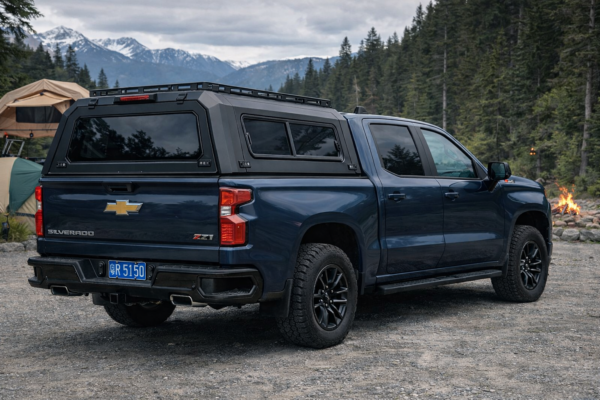
The right build tier comes down to four questions: How long are your typical trips? How many people are you camping with? Does your truck need to work between adventures? And what’s your payload capacity?
For solo or couple camping on weekend trips, Build 1 (canopy + cross bars + tent) is the right starting point — you get the canopy security benefit immediately and can add accessories over time without replacing the core components. For family trips or longer weekends, Build 2 adds the awning and organized interior storage that makes camp actually comfortable. Build 3 is for committed overlanders who camp for a week or more at a time in remote areas and need genuine self-sufficiency. Build 4 is for working Canadians who can’t justify a separate vehicle for adventure and need the truck to earn its keep Monday through Friday.
One important consideration unique to canopy builds: payload. A quality aluminum canopy, cross bars, rooftop tent, and full expedition gear adds up quickly. Check your truck’s payload rating before committing to a full Build 3 setup on a half-ton truck — this is where some drivers find a 3/4-ton (Ram 2500, F-250, Silverado 2500) makes more sense.
Canopy vs. Other Setups
How an Aluminum Canopy Compares
If you’re deciding between a canopy, a bed rack, and a tonneau cover setup, here’s the honest breakdown. Each approach has real trade-offs — the canopy wins on security and weather protection, but it’s the heaviest and most expensive option upfront.
Aluminum Canopy
✓ Fully enclosed, lockable bed
✓All-weather protection
✓Highest interior storage volume
✓Best platform for cabinets and drawers
✓ Roof rated for cross bars + tent
✗ Heaviest option — watch payload
✗ Highest upfront cost
✗ Semi-permanent — not quick to remove
Bed Rack
✓ Most modular setup
✓ Best open bed access at camp
✓ Lower cost entry point
✓ Easier to remove and reinstall
✗ Open bed — no weather or theft protection
✗ No interior storage system option
✗ More visual bulk, more wind drag
- ✓ Lowest profile, cleanest look
- ✓ Weatherproof bed cover
- ✓ Lower weight impact
- ✓ Best for daily driving
- ✗ Lower load capacity than canopy
- ✗ No interior standing height
- ✗ No organized storage system
We have dedicated guides for both alternatives: Truck Bed Rack Overland Setup Guide and Truck Tonneau Cover + Rooftop Tent Setups.
Built for Canadian Conditions
Where Canopy Builds Prove Their Worth
The all-weather protection and lockable storage of a canopy setup matters most in Canada’s most demanding overlanding destinations.
Yukon & Northern BC Highways
Dust, gravel chips, and remote distances make enclosed storage essential. A full expedition canopy build is the right tool for this terrain.
Kananaskis & AB Foothills
Sudden weather shifts and spring mud. A locked canopy keeps gear clean and dry; a 4-season tent handles the overnight lows.
Long runs between services. A canopy with a 12V fridge and power station is the self-sufficient setup BC distances demand.
Vancouver Island Backroads
Rain is constant. A canopy keeps everything dry — tools, sleeping gear, and food — in conditions where an open bed rack becomes a problem overnight.
Algonquin & Northern Ontario
Black flies, humidity, and variable access roads. Organized interior cabinet storage keeps camp efficient where you spend more time at the site than on the road.
Salt air, coastal rain, and ferry logistics. A canopy keeps the bed sealed, secure, and protected during multi-day coastal touring.
Frequently Asked Questions
Build Your Canopy Rig
Kermode Overland carries vehicle-specific aluminum canopies, canopy cross bars, rooftop tents, awnings, storage cabinets, portable fridges, lighting, and recovery gear — everything for any of these builds, shipped across Canada.
→ Shop Aluminum Canopies
→ Tonneau Covers
→ Shop Rooftop Tents
→ Canopy Cross Bars
→ Explore Awnings
→ View Storage
→ Lighting & Power
→ Portable Fridges
→ Recovery Gear