
Overlanding Setups — Pickup Trucks
Truck Bed Rack Overland Setup Guide
Four proven builds for Tacoma, Ranger, Gladiator, F-150, and more — from a clean weekend rig to a fully loaded expedition truck. Keep your bed.
Keep your utility. Build the setup you actually want.
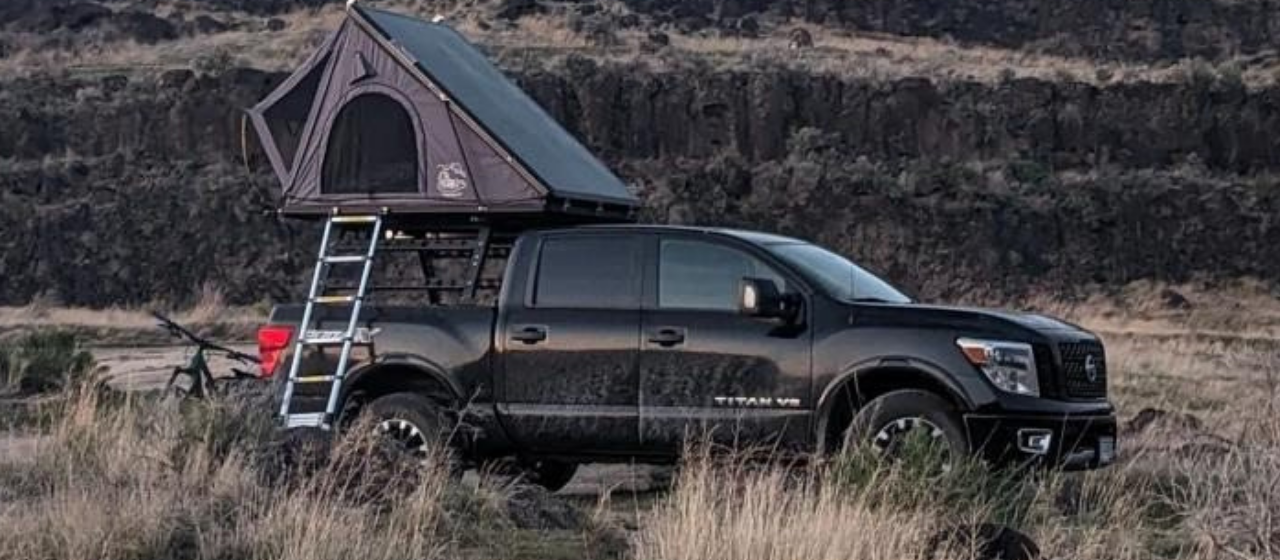
The truck bed rack is one of the smartest platforms in overlanding because it solves a real problem: how do you run a rooftop tent, awning, and camp gear on a pickup without losing the bed you actually need? The answer is to go up. A bed rack lifts your tent above the bed, keeps the space underneath fully usable, and turns your truck into a modular camping rig without committing to a permanent canopy build.
This guide covers four setups in order of build depth — from a stripped-down mid-height rack and tent combo to a fully loaded expedition system. Each one includes the core gear, realistic CAD price ranges, which trucks it fits best, and exactly what to buy first. Start where it makes sense for your budget and how you use your truck. Every setup below can grow over time.
- Toyota Tacoma
Ford Ranger
Jeep Gladiator
Ford F-150
Ram 1500
- Chevy Colorado
GMC Canyon
Nissan Frontier
Ram 2500
Toyota Tundra
Choose Your Setup Tier
All four setups are covered in detail below — use this table to find your starting point.
| Setup | Rack Type | Best For | Est. Cost (CAD) |
|---|---|---|---|
|
1
Mid-Height + Tent
|
Mid-height rack | Weekends, entry-level builds | $1,800 – $3,000 |
|
2
Full-Height + Tent + Awning
|
Full-height rack | Longer weekends, families | $4,000 – $6,500 |
|
3
Fully Loaded System
|
Heavy-duty rack | Multi-day, remote travel | $8,000 – $13,000+ |
|
4
Work + Weekend
|
Any bed rack | Daily drivers, dual-use | $1,800 – $3,500 |
Setup 1 — Entry Level
Mid-Height Rack + Tent
Estimated build cost: $1,800 – $3,000 CAD
Toyota Tacoma (all trims — excellent aftermarket rack support), Ford Ranger, Chevy Colorado, GMC Canyon, Nissan Frontier. Ideal for mid-size short-bed and standard-bed configurations. Verify your bed length before ordering — most racks are available in 5′, 5’5″, and 6′ bed sizes.
What You Need
Mid-height truck bed rack
Rooftop tent (hardshell or softshell)
Basic bedding — season-appropriate sleeping bag
Storage box or soft bags for the bed below
Traction boards or basic recovery kit
Camp lantern or rechargeable lighting
Why It Works
- Lower profile than full-height builds
- Better highway fuel economy
- Faster tent access at camp
- Truck bed remains usable below
- Easy to scale up later — rack stays, gear grows
- Strong budget-to-capability ratio
Setup 2 — Full Basecamp
Full-Height Rack + Tent + Awning
Estimated build cost: $4,000 – $6,500 CAD
Toyota Tacoma, Ford F-150, Ram 1500, Jeep Gladiator. Full-height racks work especially well on full-size trucks where the increased cab height already makes the overall roofline tall — the tent height relative to the ground stays manageable. Gladiator owners: verify rack fitment against the sport bar.
- Full-height truck bed rack
- Rooftop tent (2–3 person)
- 270° or side-mount awning
- Portable fridge or quality cooler
- Roof-mounted or bed storage boxes
- Lighting and basic camp power
- Standing clearance under tent at camp
- Awning creates shade and weather cover
- Full bed access while tent is deployed
- Cold food storage extends trip length
- Strong platform for adding gear over time
- Handles BC forest service roads and AB gravel
Setup 3 — Expedition Ready
Fully Loaded Rack System
Estimated build cost: $8,000 – $13,000+ CAD
Ford F-150 (especially Tremor and Raptor builds), Ram 1500 TRX or 2500 Power Wagon, Toyota Tundra, Toyota Tacoma TRD Pro. These trucks have the payload, suspension, and off-road capability to carry a heavy rack system and still perform in genuine backcountry. Check your truck’s payload rating before loading the full kit.
- Heavy-duty truck bed rack (500+ kg static rating)
4-season rooftop tent
180° or 270° full awning system
Modular storage boxes or cargo cases
12V compressor fridge (not a cooler)
Portable power station or dual-battery kit
Full recovery kit — boards, hi-lift, strap, shovel
Water container and portable camp kitchen
- Cold storage for 5–10 days between resupply
Power for fridge, lights, devices, and comms
Recovery gear for remote Canadian terrain
4-season tent handles Kananaskis spring lows
Fully modular — strip down for work runs
No trailer, no canopy — just the truck
Better off-road dynamics than canopy builds
Setup 4 — Dual-Purpose
Rack + Tent for Work & Weekend Use
Estimated build cost: $1,800 – $3,500 CAD
One truck, two jobs. This setup is for drivers who haul tools or materials during the week and want to be campsite-ready by Friday. The rack stays on the truck, the tent is quick to remove if you need a full clear bed, and the rest of the gear lives in a compact storage system that doesn’t get in the way of work. No permanent commitment, no overbuilding.
Ford Ranger, Chevy Colorado, GMC Canyon, Nissan Frontier, Toyota Tacoma. Mid-size trucks are ideal for this use case — small enough for urban jobsites and parking, capable enough for weekend dirt roads. A removable or split-design rack makes the transition between work mode and camp mode faster.
- Truck bed rack (removable design preferred)
Rooftop tent (hardshell for fast removal)
Compact storage system for the bed
Basic camp lighting
Optional side awning for weather cover
- Bed stays usable for work loads between trips
Hardshell tent removes in under 20 minutes
No permanent modifications to the truck
Budget-friendly — build what you need first
Easy to scale up as overlanding takes over
Best of both worlds for working Canadians
Why This Setup Works
Bed Rack vs. Canopy: Why More Canadians Are Choosing the Rack
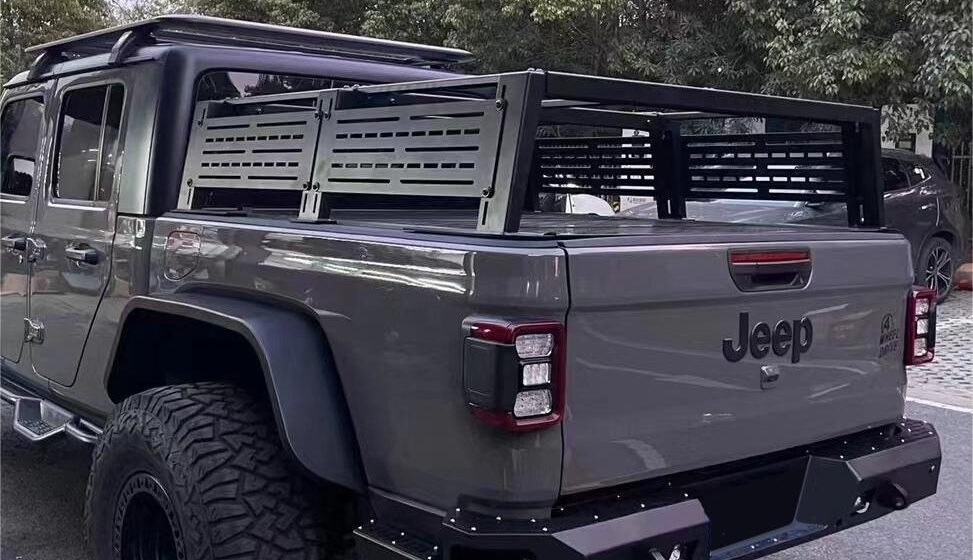
Aluminum canopy builds are impressive, but they come with trade-offs: they’re permanent, expensive, heavy, and they close off the truck bed entirely. A bed rack setup is the opposite — modular, removable, and purpose-built to keep your truck useful in both modes.
For most Canadian overlanders running forest service roads in BC, gravel in Alberta, or backcountry in Ontario, a well-built bed rack with a rooftop tent checks every box. You get the elevated sleeping platform, the gear storage, and the off-road clearance — without sacrificing the truck bed or locking yourself into one configuration forever. You can haul a quad on a long weekend, load the rack back up for a camping trip the following week, and swap tents or add an awning as your kit evolves.
The rack is also the most affordable way to get a capable rooftop tent setup on a truck. A mid-height rack and softshell tent is a more accessible entry point than most canopy builds, and every dollar spent on the rack and accessories carries forward as you upgrade over time. The gear compounds. The setup doesn’t lock you in.
Why This Setup Works
Where These Builds Get Used
Truck bed rack setups handle Canada’s most demanding overland terrain. Here’s what to expect in each region.
Kananaskis & Banff Backcountry, AB
High-clearance gravel FSRs, unpredictable spring and fall weather. Full-height rack + 4-season tent is the call here.
Coquihalla & Okanagan FSRs, BC
Long distances between services. Extended setup with a fridge and power station earns its keep on BC runs.
Yukon & Northern BC Highways
Remote and unforgiving. Fully loaded rack with recovery gear, 4-season tent, and ample food storage is non-negotiable.
Algonquin & Frontenac, ON
Well-maintained access roads, beautiful sites. Mid-height rack and tent build handles everything here easily.
Cabot Trail & Cape Breton, NS
Coastal weather changes fast. An awning is worth its weight on Atlantic road trips. Full-height rack + awning setup is ideal.
Prairies & Saskatchewan Badlands
Wind is the main factor. A hardshell tent and low-profile rack combination handles the Prairies better than a softshell open to the elements.
Frequently Asked Questions
A truck bed rack is a freestanding metal frame that mounts inside or to the sides of a pickup truck bed, elevating gear above the bed floor. Overlanders use them to mount a rooftop tent, awning, and accessories while keeping the truck bed usable below for storage, coolers, and gear bins. They’re more modular and cost-effective than a full aluminum canopy, and can usually be removed if you need a clear bed.
Most truck bed racks are not compatible with a tonneau cover while the rack is installed, as the rack legs typically use the same rail positions. Some low-profile racks can coexist with a folding tonneau, but in most cases you’ll need to choose one or the other. If you want enclosed bed protection and overlanding capability, an aluminum canopy setup is usually the better route — we have a separate guide for that.
Rack load ratings vary by brand and model. Entry-level racks typically handle 200–300 lbs (90–135 kg) static. Heavy-duty expedition racks are often rated to 500–800 lbs (225–360 kg) static. Always check the dynamic load rating separately — this is typically 50–60% of the static rating and is the number that matters for a rooftop tent while driving.
Mid-height racks (typically 18–24 inches above the bed rails) keep your rooftop tent lower, improving access and reducing wind drag on the highway. Full-height racks (typically 40–50 inches above the rails) give you full standing clearance under the tent, making it much easier to access the truck bed, cooler, and gear while the tent is deployed. If you camp frequently and value bed access at camp, full-height is worth the trade-off in height and fuel economy.
The Toyota Tacoma is the most popular overlanding truck in Canada due to its reliability, off-road capability, and massive aftermarket rack ecosystem. The Ford Ranger, Jeep Gladiator, Ford F-150, Ram 1500, and Chevy Colorado are also strong choices. Full-size trucks offer higher payload and a larger bed; mid-size trucks are more maneuverable on narrow forest service roads.
Yes — this is one of the main advantages of a bed rack over a canopy. With a rooftop tent mounted on top, you still have full or partial access to the truck bed below depending on the rack design and what you store there. Many overlanders keep a fridge, storage bins, and recovery gear in the bed while the tent sits on the rack above. A full-height rack makes this even more practical, giving you standing clearance to organize the bed at camp.
A basic mid-height rack and rooftop tent combination starts around $1,800–$3,000 CAD. A full-height rack with tent, awning, and storage typically runs $4,000–$6,500 CAD. A fully loaded expedition setup with a fridge, power station, recovery gear, and premium rack can reach $8,000–$13,000+ CAD depending on brands. All setups in this guide include estimated CAD ranges to help you plan.
Build Your Truck Setup
Rooftop Tents Canada carries truck bed racks, rooftop tents, awnings, storage gear, portable fridges, lighting, and recovery equipment — everything you need to build any of these setups. Ships across Canada.
Also in This Series
Aluminum Truck Canopies
Transforms your truck into a secure, all-weather adventure platform — ready for everything from weekend camping to full remote expeditions.
Car, SUV & Crossover Setups
Build your daily driver for overlanding with a rooftop tent and rack.
Tonneau Cover + Rooftop Tent
Low-profile daily-driver builds with a rack-compatible tonneau cover.