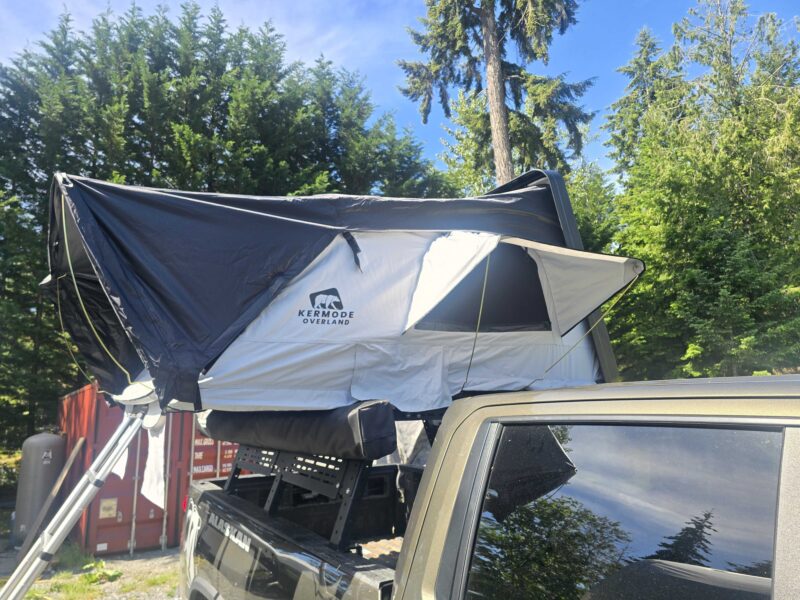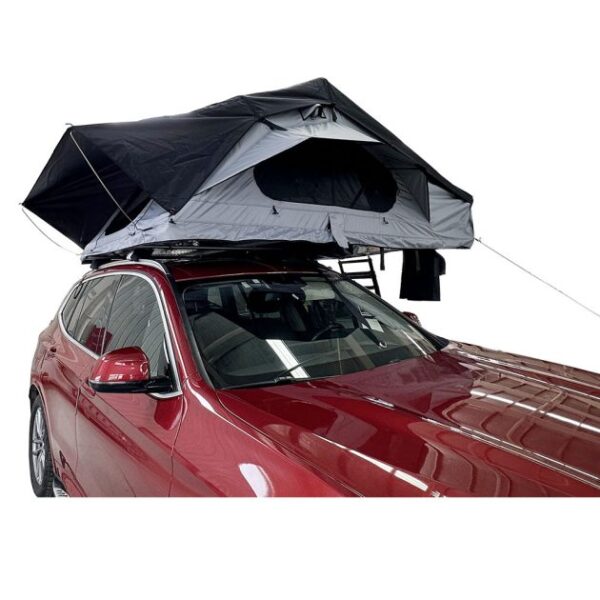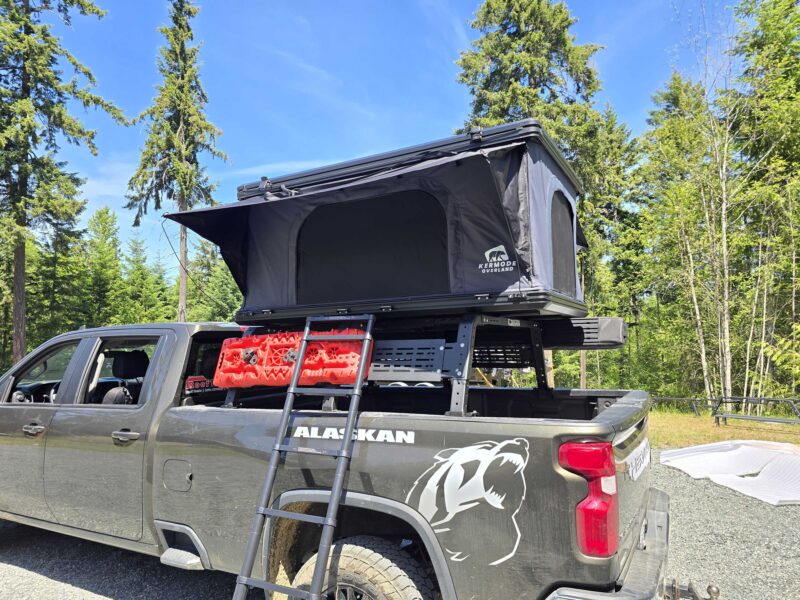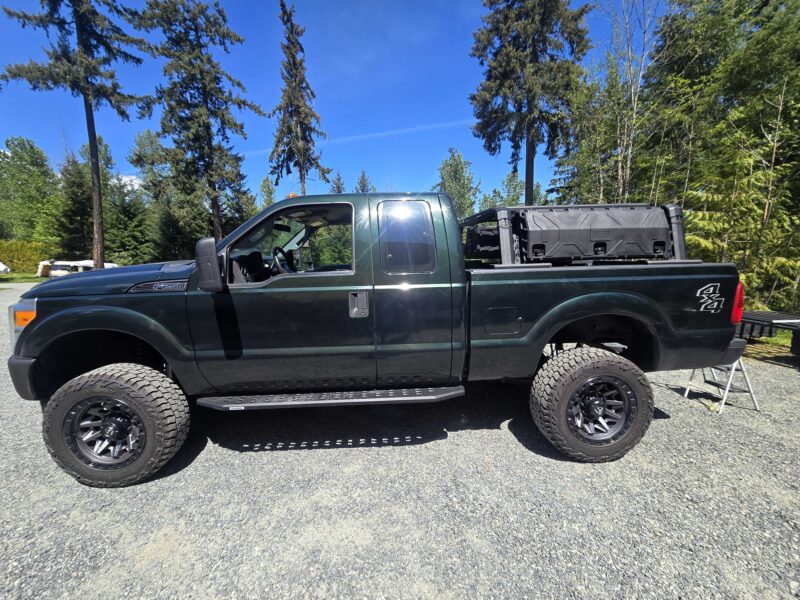


Most people buying their first rooftop tent in Canada start the same way. They Google the category, land on a spec sheet, see fifteen models that all claim to be weatherproof, lightweight, and easy to set up, and close the tab more confused than when they opened it.
The specs aren’t wrong. They’re just the wrong lens. Choosing a rooftop tent isn’t about which model has the best R-value on paper. It’s about matching the tent to three things you already know about yourself: your vehicle, your camping style, and your budget. Get those three right and the hard shell vs soft shell question answers itself.
This guide works through each one. By the end, you’ll know exactly which direction you should be shopping — and why.
Start Here: The Question Nobody Asks First
Before you look at a single tent, answer this honestly: how many nights a year do you actually sleep in it?
This number shapes everything else.
Under 10 nights a year. You’re a weekend camper. Long weekends, a summer trip, maybe a fall trip. You want comfortable, reasonably priced, and easy enough that setup isn’t a project. A soft shell almost always makes more sense here.
10 to 25 nights a year. You’re a regular. You camp through at least two seasons, you’ve done a few multi-night backcountry trips, and you’re serious enough that gear quality matters to you. Either shell type can work, but the trade-offs start pointing toward hard shells.
25+ nights a year. You’re running your rig year-round, camping in shoulder season and occasional winter, and doing it often enough that speed and weather performance aren’t nice-to-haves. Hard shell. Full stop.
Everything else in this guide builds from that number. Keep it in mind.
Step One: Know What Your Vehicle Can Actually Handle
This is the step most buyers skip, and it’s the one that causes the most problems.
Every vehicle has two roof load ratings that matter. The static load is the weight the roof can support while parked. The dynamic load is the weight it can support while moving down the road. Static loads are generous — usually 150 to 300 kg on most trucks and SUVs. Dynamic loads are not — typically 75 to 100 kg, sometimes less on lighter crossovers.
A rooftop tent sits on your roof all the time, including every kilometre you drive to and from the campsite. It has to meet the dynamic load rating, not the static one.
Here’s how the numbers shake out across common vehicles:
Full-size trucks (F-150, Tundra, RAM 1500, Silverado, Sierra) The easiest vehicles to spec for a rooftop tent. A proper bed rack moves the tent weight off the cab roof entirely and onto the truck bed frame, which is built for far higher loads. On a bed rack, dynamic load limits aren’t a meaningful constraint. You can run any tent on the market — hard shell, soft shell, large format — without worrying about limits.
Mid-size trucks (Tacoma, Ranger, Colorado, Gladiator) Same story as full-size trucks when a bed rack is involved. Mid-size bed racks support tents up to 100+ kg without issue. If you’re mounting to the cab roof instead, check your specific model and year. Most mid-size trucks support a soft shell comfortably; some support lighter hard shells. A bed rack is the cleaner solution.
Large SUVs (4Runner, Land Cruiser, Bronco, Sequoia, Suburban) These vehicles have the roof structure to support hard shells, but factory roof racks usually can’t. You need aftermarket crossbars rated for the tent’s weight, or a roof platform. Once that’s sorted, full-size hard and soft shells both work. Dynamic loads on these vehicles run 100 to 150 kg through a proper crossbar system.
Mid-size SUVs (Pathfinder, 4Runner base, Wrangler, Grand Cherokee) Vehicle-specific. Most support soft shells without issue. Hard shells require weight checking — a 90 kg hard shell on a vehicle with an 85 kg dynamic limit is a problem. Lighter hard shells (under 70 kg) often work. Get the weight ratings confirmed before you buy.
Smaller SUVs and crossovers (RAV4, Subaru Outback, Subaru Forester, CX-5) These vehicles are often underestimated. Many support soft shells up to 60 to 70 kg without modification. Dynamic loads are lower, so heavier hard shells are usually out. If you drive a crossover and want a rooftop tent, a soft shell is the safe answer. A lightweight hard shell (under 65 kg) may work on vehicles with reinforced crossbars — ask before you buy.
Jeeps Wranglers on hardtops can support either shell type with proper crossbars. Soft tops cannot support any rooftop tent — the soft top isn’t a structural element. Gladiators behave like mid-size trucks and work well with bed racks. Wrangler Unlimited (4-door) has more roof real estate for a larger tent.
The single most important takeaway from this section: the rack matters as much as the tent. A premium tent on undersized crossbars is the wrong way to spend money. Any reputable shop will check your vehicle’s weight ratings before recommending a tent, and should refuse to sell you a setup that doesn’t match.
Step Two: Map Your Camping Style
Once you know what your vehicle can support, the next filter is how you use the tent in the field.
You Move Camp Every Day
If you’re touring — waking up, packing, driving to a new spot, setting up again — setup and takedown speed is the most important feature you own. Doing that routine twice a day with a soft shell adds 15 to 20 minutes to your schedule, every single day. Across a 10-day trip, that’s hours.
This camping style points to: hard shell.
You Set Up Camp and Stay
If you drive to a spot Friday night, camp through the weekend, and pack out Sunday, setup speed matters much less. You’re doing it once in each direction. A soft shell’s 5-minute setup is entirely manageable when you’re only doing it twice.
This camping style works with: either shell type.
You Camp Mostly in Summer
Vancouver Island summers are kind to both shell types. Rain is less frequent, temperatures are forgiving, and a soft shell’s ventilation advantage (more windows, more breathable fabric) actually becomes useful on warm nights. If summer is your primary season, the cost savings of a soft shell buy a lot of other gear.
Summer-first camping points to: soft shell.
You Camp in Spring, Fall, or Winter
BC shoulder season is real. Rain, cold mornings, wind — the conditions that expose the gaps in cheaper gear. Hard shells handle sustained wet weather with more confidence, retain heat better overnight, and are less affected by strong gusts. If you’re planning trips into October, camping in Strathcona in April, or running north Island roads in November, the hard shell’s weather performance pays off in those conditions specifically.
Multi-season and shoulder-season camping points to: hard shell.
You Take Kids or Multiple Adults
Sleeping capacity is a soft shell strength. Soft shells in the 140×240 cm range comfortably sleep two adults and a child. Some larger soft shell models reach 280 cm in one dimension and can sleep three adults, though uncomfortably. Hard shells in the same width sleep two adults efficiently but are not designed for three.
Families with young kids point to: soft shell.
You Leave Camp During the Day
If you drive into town for supplies, do a day hike that ends far from camp, or need to use your vehicle while the tent stays set up, a hard shell is the only option. Hard shells can be left closed (but not packed away) at camp while you drive. Soft shells must be deployed or fully packed — there’s no middle state.
Day trips from a base camp point to: hard shell.
Step Three: Understand the Real Cost
Rooftop tent pricing in Canada runs a wide range, and the sticker on the tent isn’t the total cost. Here’s an honest breakdown.
The Tent
Entry soft shell: CAD $1,800 to $2,500 Mid-range soft shell: $2,500 to $3,800 Premium soft shell: $3,800 to $5,500
Entry hard shell: $3,200 to $4,500 Mid-range hard shell: $4,500 to $6,500 Premium hard shell (aluminum, insulated): $6,500 to $9,000+
The gap is real. A mid-range soft shell and a mid-range hard shell are separated by roughly $2,000. That said, hard shells hold resale value significantly better. A well-maintained hard shell after four years sells for 65 to 75 cents on the dollar. A soft shell of the same age sells for 35 to 50 cents. If you’re buying once and keeping it for a decade, the hard shell’s effective cost is lower than it looks.
The Mounting Hardware
This is the number people forget until the tent arrives. Depending on your vehicle, you’ll need one of the following:
- Universal crossbars: $300 to $600. Works on most factory roof rails. Required minimum for mounting any tent.
- Vehicle-specific crossbars: $400 to $900. Better fitment, higher load ratings. Recommended for hard shells.
- Roof platform rack: $900 to $1,800. Provides the most structural mounting surface. Best for hard shells and heavy soft shells on SUVs.
- Truck bed rack: $1,200 to $2,500. The cleanest solution for any truck. Moves weight off the cab, clears sight lines, doesn’t interfere with daily driving.
Budget an extra $500 to $1,500 for mounting hardware on top of the tent price, and don’t skip this step. The wrong crossbars on the right tent is a safety issue, not just a fitment annoyance.
Accessories Worth Including in the Initial Budget
Awning: $500 to $1,400. Adds covered cooking and sitting space. On the coast, in any season, this is not a luxury — it’s the difference between a comfortable campsite and standing in the rain next to your stove. A 270-degree awning gives the most coverage. A 180-degree works well for most setups.
Condensation mat: $80 to $150. Sits between the foam mattress and the tent floor. Prevents moisture from wicking into the mattress overnight. Almost no one budgets for this. Almost everyone wishes they had.
Annex room: $400 to $800. Attaches below the tent to create a ground-level enclosed space. Useful for changing, storing wet gear, or housing a dog that won’t climb a ladder.
The BC Condition Factor
One thing Canadian buyers have that buyers in drier climates don’t is weather that actually stress-tests gear.
BC specifically — especially the coast, the Island, and anywhere west of the Cascades — combines high rainfall, salt air, temperature swings, and UV exposure into a test environment that separates durable gear from spec-sheet gear fast.
A few things that matter specifically in BC conditions:
Zipper quality. Salt air corrodes cheap zippers in one or two seasons. Look for YKK zippers or marine-grade equivalents. On soft shells, the zipper line where the rain fly meets the tent body is the first failure point. On hard shells, the locking latches are the equivalent wear point.
Fabric weight and coating. Soft shell canvases rated at 280 GSM or higher handle the wet coast. Lighter fabrics become porous faster under sustained BC rainfall. Polycotton holds up better than pure polyester over time and breathes better on warm nights.
Drainage design. Hard shells that channel water off the edges cleanly are better than ones that pool water near the seams. In a two-day coastal storm, how water moves off the tent matters.
Frame materials. Aluminum frame components don’t rust. Steel components can, especially at any unpainted joint or weld. On the wet coast, aluminum is worth the premium.
These aren’t abstract concerns. They’re what separates a tent that feels the same after five years from one that shows its age after two BC winters.
The Decision Made Simple
After vehicle load, camping style, and budget, most buyers land clearly in one camp. Here’s the summary.
Choose a soft shell if: Your vehicle is a lighter SUV or crossover, you camp primarily in summer, you value sleeping space over speed, and budget is a meaningful factor. Soft shells are excellent tents. They’re not the compromise option — they’re the right option for a specific camper.
Choose a hard shell if: You drive a truck or large SUV with proper mounting hardware, you camp multiple times a year across at least two seasons, you value setup speed and can’t give up weather performance, and you plan to keep the tent long enough for resale value to matter.
If you’re genuinely on the fence: come see both in person. The difference between reading about a hard shell and standing next to a deployed hard shell at a shop is significant. The footprint, the interior, the latch feel, the ladder angle — none of that comes through in a spec sheet or a YouTube video.
See Both in Nanaimo
Kermode Overland stocks hard shell and soft shell rooftop tents at the Nanaimo showroom, fitted on real rigs, available to look at and touch before you buy. The team has run the same FSRs, beach approaches, and Strathcona pulloffs you’re heading to. Advice here is based on what holds up in BC conditions over years of use, not on brand relationships or placement fees.
If you know your vehicle and your camping style, bring both. We’ll match you to the right tent, the right rack, and the right mounting hardware in one visit — so the setup works before it leaves the shop, not after it arrives on your doorstep.
Browse the Hard Shell and Soft Shell categories online, or get in touch directly with your vehicle make, model, and year and we’ll point you to the right starting point.