

If you are buying a rooftop tent this year, the first real decision is not which tent. It is what you are mounting it to. A truck and an SUV both make excellent rooftop tent platforms, but they get there in completely different ways, with different hardware, different handling, and different costs. Pick the wrong combination and you end up with a tent your vehicle cannot legally carry down the highway, or a mounting setup that fights how you actually use the rig.
This is the decision laid out plainly for Canadian buyers: truck versus SUV, the mounting hardware each needs, the load math that quietly governs all of it, and which rigs make the most sense heading into summer. We are not comparing specific builds here. We are helping you choose the right base and the right way to mount on it.
The case for a truck
A pickup brings real, structural advantages to a rooftop tent setup, and most of them come down to the bed.
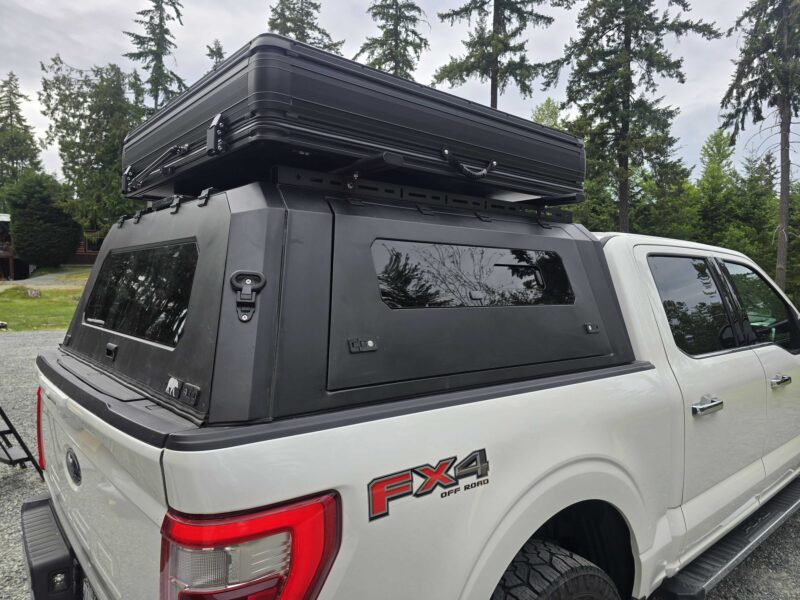
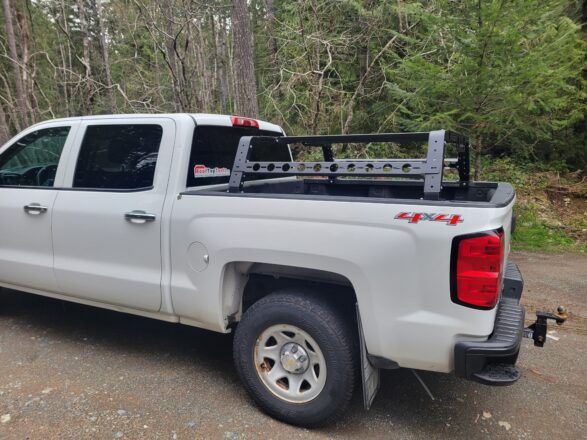
A bed rack is a purpose-built platform: On a truck, the tent rides on a bed rack, a frame that mounts over the box. It is one of the highest-value upgrades a truck owner can make, giving you a second level: tent on top, bed still usable underneath.
Gear separation: That is the big one. The tent lives up high while the bed below stays free for gear, recovery equipment, and storage. Your sleeping setup and your cargo are not competing for the same space.
Payload and capability: Trucks generally carry more, and a bed rack puts the weight over the box rather than on the cab roof. Manufacturers typically do not advise mounting a tent on a truck’s cab roof at all, which is exactly why the bed rack exists.
Weight nearer the axles: A bed rack keeps the load lower and closer to the axles than a roof-mounted setup, which is easier on handling than carrying the same weight high over the cab.
The trade is height and footprint. You climb a little higher into a bed-rack tent, and a truck is a bigger vehicle to live with day to day.
The case for an SUV
An SUV comes at it differently, and for a lot of Canadian overlanders it is the more practical base.
Lower centre of gravity: With the tent on the roof of a lower vehicle, or on a platform rack closer to the roofline, an SUV generally feels more planted than a tall truck carrying weight up high. SUVs are ideal candidates for platform racks thanks to strong roofs and factory mounting points.
Daily driver friendliness: An SUV is easier to park, easier to live with, and more fuel-efficient than most full-size trucks. For people whose overland rig is also their everyday vehicle, that matters.
Simpler, often cheaper mounting: Most SUVs already have factory roof rails or mounting points, so getting a rack up there can be more straightforward and less expensive than building out a truck bed.
Enclosed cargo: Your gear rides inside, dry and secure, rather than in an open bed.
The trade is space. On an SUV, the tent and your cargo capacity share the same vehicle, so you do not get the clean tent-up-top, gear-below separation a truck bed gives you.
Bed rack vs roof platform: the hardware that decides it
This is where the truck-versus-SUV choice becomes concrete, because each leads to a different mounting system, and the mounting system is what your whole setup depends on.
A truck bed rack mounts over the box and is the standard, and best, way to carry a rooftop tent on a pickup. It is the king of truck mounting precisely because it adds a level without sacrificing the bed, keeps weight reasonably low, and is built for the loads overlanders actually carry.
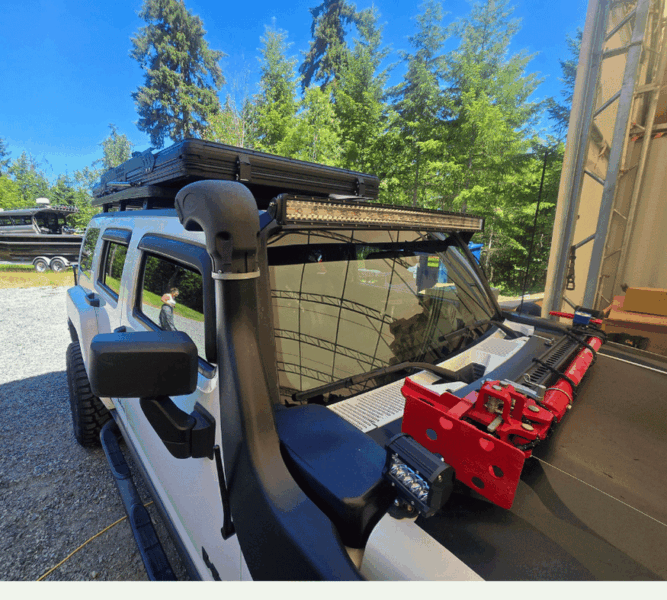
A roof platform rack is a full-coverage tray that mounts to an SUV’s roof, creating a versatile surface for a tent plus awnings, storage, and gear. On a strong-roofed SUV like a 4Runner, Wrangler, or similar, a platform is the natural choice and turns the roof into a complete cargo system.
Crossbars are the lighter, more economical option, two bars rather than a full tray. They work for many rooftop tents and are common on crossovers and smaller SUVs, or on a truck cab purely to support a tent’s overhang. The catch is that crossbars and their mounting points often carry lower load ratings than a full platform or bed rack, which brings us to the part that quietly governs everything.
Tent weight and the dynamic load math
This is the single most important section, and the number one mistake first-time buyers make. Your vehicle’s roof, and your rack, each have two different weight ratings, and confusing them is how people end up over the limit.
Static load: The weight the roof or rack can hold while parked. This is the high number, often several times the dynamic figure. It is why two adults can sleep in a rooftop tent safely: at camp, the vehicle is stationary, so the static rating applies.
Dynamic load: The weight the roof or rack can carry while driving, accounting for braking, cornering, bumps, and wind. This is the lower number, and it is the one that actually limits your tent choice, because it has to cover the rack plus the closed tent while you are on the move.
The rule that keeps you safe: the dynamic rating is what your tent plus rack must come in under, and when the vehicle and the rack have different ratings, you use the lower of the two. A rack rated higher than your roof does not raise your roof’s limit, and vice versa. Your setup is only as strong as its weakest rated component.
Two practical consequences. First, a bed rack on a truck sidesteps the cab roof’s modest dynamic rating entirely, which is part of why trucks handle heavier tents so easily. Second, on a smaller SUV or crossover, the dynamic rating is often the real ceiling, so a lighter tent, frequently a soft shell, is the smart match. Heavier hard shell tents suit vehicles and racks with the dynamic capacity to carry them.
Always confirm your specific vehicle’s dynamic roof rating in the owner’s manual, and your rack’s rating from the manufacturer, before choosing a tent. Use the lower number.
Best truck bases in Canada
These are popular, well-supported pickups for a bed-rack rooftop tent build, spanning midsize to full-size. The right one depends on how much you want to live with day to day versus how much capability and space you want.
Best SUV bases in Canada
On the SUV side, the split is between body-on-frame off-roaders that take a full platform and carry heavier tents, and car-based crossovers that suit lighter setups on crossbars.
On the crossover end (Outback, RAV4), check the dynamic roof rating carefully and lean toward a lighter tent. On the body-on-frame end (4Runner, Bronco), a platform rack and a heavier tent are well within reach.
Cost comparison: the full setup in Canada
People want a dollar figure, so here is the honest shape of it. These are ballpark Canadian ranges for a complete setup (mounting plus tent), not exact quotes, since real pricing shifts with the specific products and options.
The general pattern: an SUV crossbar-plus-soft-shell setup is often the cheapest entry point, while a truck bed rack adds hardware cost but buys you the gear-separation a truck is prized for. At the premium end the two converge, since the tent becomes the bigger line item either way. Spend where it matters, the mounting system and the tent, and treat accessories as later additions.
Order timing before summer
Mounting hardware is the piece that catches people out. Tents are usually in stock, but the right bed rack or platform for a specific vehicle can involve fitment checks and occasional lead times, and demand climbs as the season opens. Ordering now, while there is time to confirm fitment and get everything installed, means you are camping in early summer rather than waiting on a rack while the long weekends pass.
Sort the mounting system first, since it dictates which tents fit, then choose the tent to match. Doing it in that order avoids the classic mistake of buying a tent the vehicle cannot properly carry.
Common questions from Canadian buyers
Is a truck or SUV better for a rooftop tent?
Neither is universally better. A truck gives you gear separation (tent up top, bed free below) and easily carries heavier tents via a bed rack. An SUV offers a lower centre of gravity, better daily-driver manners, and often simpler, cheaper mounting. The right answer depends on how you use the vehicle.
Can any SUV take a rooftop tent?
Most can take some tent, but the dynamic roof rating is the limit. Body-on-frame SUVs like a 4Runner handle a full platform and a heavier tent, while car-based crossovers like a RAV4 or Outback should pair with a lighter soft shell tent and have their roof ratings checked carefully.
What is the difference between a bed rack and a platform rack?
A bed rack mounts over a truck’s box and carries the tent above the bed. A platform rack is a full tray that mounts to an SUV’s roof. Both are strong tent platforms, they just suit different vehicles. Crossbars are the lighter, lower-rated alternative for smaller setups.
Why does dynamic load matter more than static load?
Because dynamic load is the driving limit, and it is lower than the static (parked) limit. Your tent plus rack has to stay under the dynamic rating while you are on the move. The static rating only tells you the roof can hold people sleeping at camp.
Do I need a heavy hard shell tent?
Not necessarily. Hard shell tents suit vehicles and racks with the dynamic capacity to carry them, often trucks and larger SUVs. Lighter soft shell tents are the smart match for crossovers and smaller SUVs where the dynamic rating is the limiting factor.
Should I buy the tent or the rack first?
The rack first, in effect. Decide the mounting system for your vehicle, since it determines which tents will fit and stay within your dynamic limit, then choose the tent to match. Buying the tent first risks getting one the vehicle cannot properly carry.
Match the tent to the rig, then get out
Truck or SUV, the winning move is the same: choose the mounting system your vehicle is built for, respect the dynamic load limit, and pick the tent to fit. Get that order right and you end up with a setup that is safe, stable, and suited to how you actually camp, instead of a compromise you work around every trip.
Kermode Overland carries truck bed racks, roof platforms, crossbars, and rooftop tents, and our vehicle filter helps match the right hardware to your exact truck or SUV. If you are building before summer, browse the lineup or reach out at kermodeoverland.com and we will help you pick the right rig and mounting setup before the season fills up.