

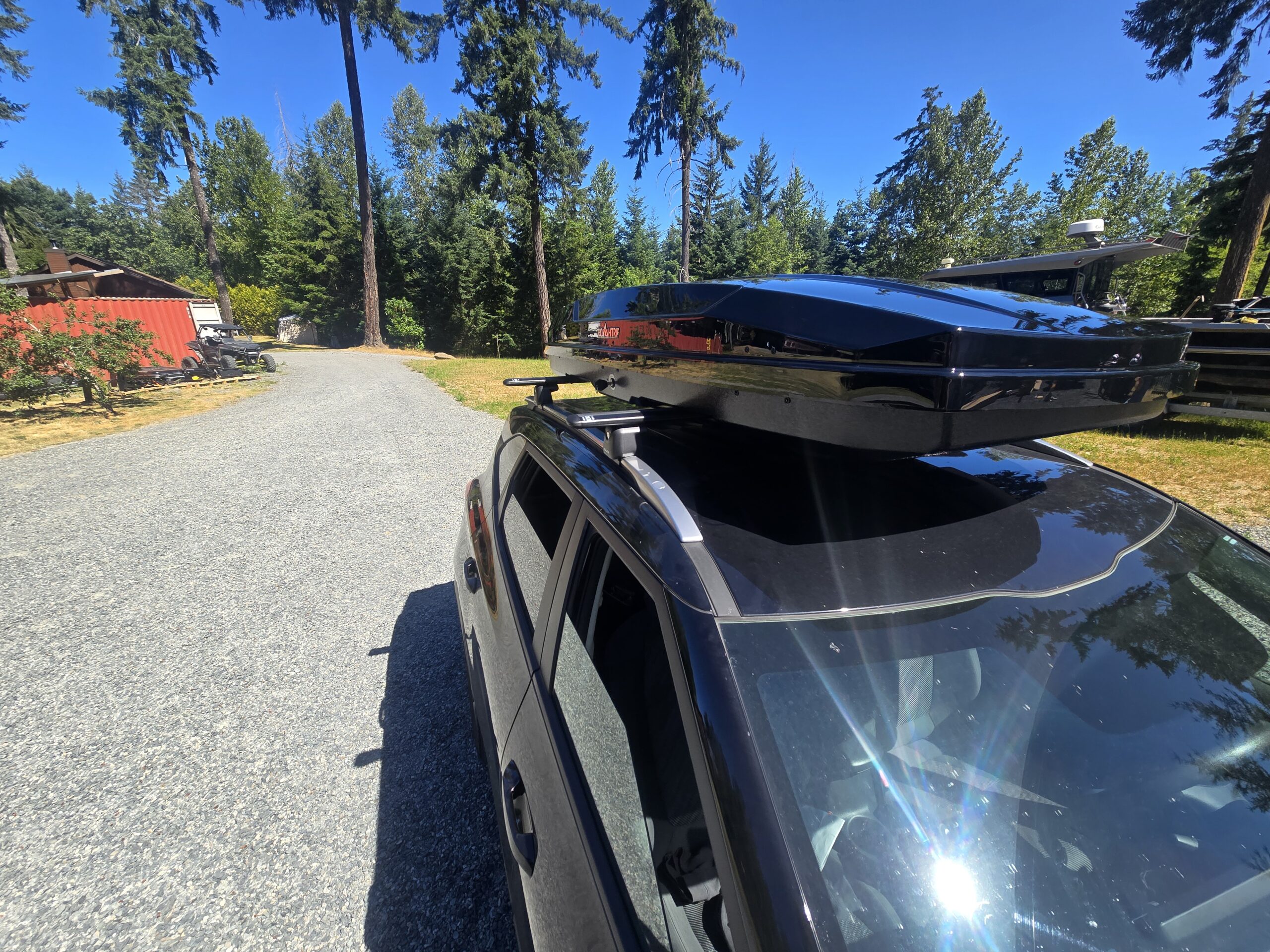
Whether you’re planning a cross-country road trip, heading into the backcountry, or simply need extra storage for family vacations, a roof cargo box is one of the best upgrades you can make to your vehicle. It provides secure, weather-resistant storage while freeing up valuable interior space for passengers and pets.
But with so many sizes, styles, and mounting options available, how do you know which roof cargo box is right for your vehicle?
This guide will help you choose the best roof cargo box based on your vehicle, travel style, and storage needs.
1. Start with Your Vehicle
The first step is determining what your vehicle can safely accommodate.
Roof cargo boxes are compatible with most:
- SUVs
- Pickup trucks
- Crossovers
- Wagons
- Hatchbacks
- Sedans equipped with roof racks
Before purchasing, check:
- Your vehicle’s maximum roof load rating
- The weight capacity of your roof cross bars
- Cross bar spacing requirements
- Available roof length
- Rear hatch clearance
Larger SUVs and pickup trucks can often accommodate longer cargo boxes, while compact SUVs and cars may require shorter models that will not interfere with the rear hatch.
2. Think About What You’ll Carry
The right cargo box depends largely on what you plan to transport.
Weekend Getaways
If you’re packing a few duffel bags, camping chairs, and extra luggage, a compact or medium-sized cargo box may be all you need.
Family Vacations
Families often benefit from larger roof cargo boxes that can hold:
- Multiple suitcases
- Strollers
- Sleeping bags
- Beach gear
- Children’s toys
- Extra camping equipment
Camping and Overlanding
Outdoor enthusiasts may need room for:
- Camp kitchen supplies
- Folding chairs
- Sleeping bags
- Clothing
- Lightweight recovery gear
- Camping equipment
Keeping dirty or bulky gear outside the vehicle also helps create a cleaner and more comfortable interior.
Winter Sports
If you frequently travel to the mountains, choose a longer cargo box capable of carrying skis, snowboards, poles, boots, and other winter gear.
3. Choose the Right Size
Roof cargo boxes come in a wide variety of lengths and storage capacities.
Smaller models are ideal for everyday use and compact vehicles, while medium-sized boxes provide a good balance between storage capacity and ease of handling.
Large cargo boxes are often best suited for:
- Large SUVs
- Pickup trucks
- Families
- Extended road trips
- Camping adventures
Remember that a larger box is not always better. The cargo carrier should complement your vehicle without restricting rear hatch access or adding unnecessary weight.
4. Hard Shell vs. Soft Cargo Storage
While both options provide additional storage, hard shell roof cargo boxes offer several important advantages.
Benefits of a hard shell cargo box include:
- Superior weather protection
- Better theft resistance
- Improved durability
- Better aerodynamics
- Reduced wind noise
- Longer service life
- Easier loading and organization
For drivers who regularly travel, camp, ski, or overland, a hard shell roof cargo box is usually the better long-term investment.
5. Look for Easy Installation
Nobody wants to spend an hour installing a roof box every time they head out.
Modern quick-mount systems allow many cargo boxes to be installed in minutes without specialized tools.
Look for features such as:
- Quick-release mounting hardware
- Lightweight aluminum mounting components
- A secure clamping system
- Compatibility with factory and aftermarket cross bars
Always confirm the mounting system fits the width, shape, and spacing of your roof cross bars before purchasing.
6. Dual-Side Opening Makes Loading Easier
One feature many buyers overlook is dual-side opening.
Being able to access your cargo from either side of the vehicle makes packing much easier, especially in parking lots, campgrounds, or when parked beside traffic.
Dual-side access also makes it easier to reach items throughout the cargo box without climbing across the vehicle.
7. Don’t Overlook Security
Your roof cargo box may contain valuable luggage, camping equipment, or sports gear.
Look for security features such as:
- Multi-point locking systems
- Reinforced locking mechanisms
- Secure mounting hardware
- Weather-protected lock cylinders
These features provide additional peace of mind whether you’re stopping for lunch, staying overnight at a hotel, or leaving your vehicle at a trailhead.
8. Weather Resistance Is Essential
Canadian weather can change quickly, so a quality cargo box should be able to handle rain, snow, dust, UV exposure, and road debris.
Choose a roof cargo carrier built with:
- Heavy-duty ABS or polycarbonate construction
- UV-resistant materials
- Full perimeter weather seals
- Reinforced hinges
- Corrosion-resistant hardware
Even with a quality weather seal, sensitive items should be packed in waterproof bags for added protection during severe weather.
9. Consider Wind Noise and Fuel Economy
Modern roof cargo boxes feature streamlined shapes designed to reduce drag and wind noise.
Although any rooftop accessory can affect fuel economy, an aerodynamic hard shell cargo box will generally perform better than a roof basket carrying exposed luggage or camping gear.
Proper installation also matters. The box should be centred on the vehicle, securely tightened, and positioned according to the manufacturer’s instructions.
10. Expand Your Storage with a Roof Top Tent
One of the most versatile overlanding setups combines a roof cargo box with a compatible roof top tent.
Some of our premium roof top tents include integrated cross bars on top of the tent, allowing a compatible cargo box to be mounted above the sleeping area.
This setup can provide additional storage for lightweight camping gear, clothing, luggage, and outdoor essentials while keeping the sleeping area below fully functional.
Before mounting a cargo box to roof top tent cross bars, always confirm:
- The tent manufacturer’s cross bar load rating
- The weight of the empty cargo box
- The weight of the cargo being carried
- The vehicle’s total dynamic roof load limit
- Clearance when opening and closing the tent
For adventurers who need to maximize every inch of available space, a compatible roof top tent and cargo box combination can create an exceptionally capable travel setup.
Why Buy from Kermode Overland?
At Kermode Overland, we carefully select roof cargo boxes designed for Canadian weather, family travel, camping, and overland adventures.
Whether you’re exploring British Columbia, travelling across Canada, heading to the ski hill, or planning your next backcountry trip, our hard shell roof cargo boxes offer the durability, security, and convenience you need.
We also carry select roof top tents with integrated cross bars, making it easier to build a complete adventure system tailored to your vehicle and lifestyle.
Final Thoughts
The best roof cargo box is not simply the biggest one. It is the model that matches your vehicle, your roof rack, your travel plans, and the gear you carry.
By choosing the right size, durable construction, secure locking system, aerodynamic design, and quality mounting hardware, you can enjoy years of dependable performance while making road trips, camping adventures, and family vacations more comfortable.
Browse the roof cargo boxes and compatible roof top tents available from Kermode Overland and start building a more capable adventure vehicle.