
Before you can mount a rooftop tent, cargo box, bike rack, or platform, you need the right foundation — and that starts with cross bars. The problem is that “roof rack” isn’t a one-size-fits-all category. The mounting system that works on your neighbour’s Subaru might not even bolt onto your Tacoma, because most vehicles fall into one of three roof types: naked (bare) roofs, raised side rails, or flush rails.
Buying the wrong cross bar system is one of the most common (and most frustrating) mistakes overlanders make. This guide breaks down all three roof types, how to identify which one your vehicle has, and which Kermode Overland cross bars are built for each.
The Three Roof Types, Explained
1. Naked Roofs (No Rails)
A naked roof — also called a “bare roof” — has no rails, tracks, or attachment points of any kind. This is common on sedans, hatchbacks, and many newer crossovers that ditch rails for a cleaner, more aerodynamic look. Think Honda Civic, Mazda3, Tesla Model 3, and base trims on a lot of modern SUVs.
Because there’s nothing to clamp onto, naked-roof cross bars use vehicle-specific mounting brackets that anchor into the door frame or roof channel, with a crossbar that spans the width of the roof.
Built for this: the ApexMount™ Series Cross Bars use vehicle-specific brackets that lock securely to the roof frame, giving you a strong, stable base for roof boxes, cargo baskets, bike racks, and ski racks — even though there’s nothing factory-installed to grab onto. Available in 115 cm, 125 cm, 135 cm, and 145 cm lengths, starting at $329 CAD.
2. Raised Side Rails
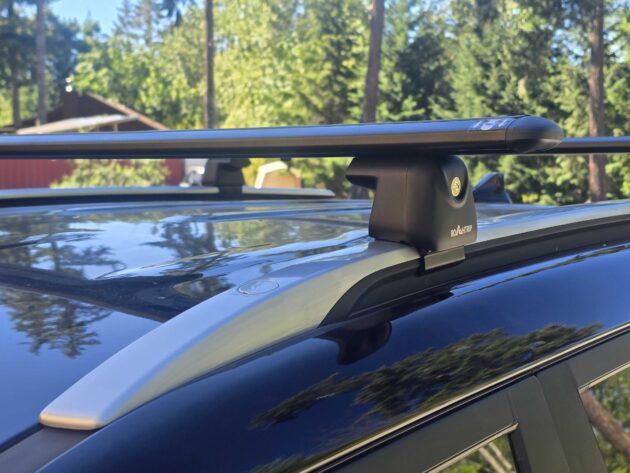
Raised rails sit up off the roofline — you can slide your fingers underneath them. This is the classic “wagon” look you’ll see on the Subaru Outback, Toyota 4Runner, Jeep Grand Cherokee, and Ford Explorer. Because the rails are elevated, cross bars typically clamp directly onto the rail itself using adjustable end clamps.
Built for this: the TrailRail™ Series Cross Bars clamp securely around raised rails for a clean, integrated fit, in 115 cm, 125 cm, and 135 cm lengths ($329–$349 CAD). If you’re outfitting a budget-conscious build, the Universal Roof Cross Bar (attaches to rails) is a lighter-duty, dual-key-locking option for raised-rail vehicles.
3. Flush Rails
Flush rails are the trickiest to spot because they sit nearly flat against the roofline with no gap underneath — common on newer RAV4s, CX-5s, Crosstreks, and most 2020-and-newer crossovers. You can’t slide your fingers under a flush rail, which means a raised-rail clamp won’t work here. Flush rail systems use a track-mounted foot that locks into the channel itself.
Built for this: the FlushRail™ Series Cross Bars are purpose-built for flush-rail vehicles, with a 75 kg dynamic load rating and 200 kg static load rating, in 115 cm, 125 cm, and 135 cm lengths ($295–$345 CAD).
How to Tell Which One You Have
If you’re not sure which category your vehicle falls into, here’s the quick test:
- Can you see a rail at all? No → naked roof. Yes → keep going.
- Can you fit your fingers underneath the rail? Yes → raised rail. No, it’s flush against the roof → flush rail.
If you’re still unsure, send our team your VIN or year/make/model through the contact page and we’ll confirm the right system before you order.
A Note on Canadian Vehicle Fitment
We see a lot of the same vehicles come through our Nanaimo warehouse, and roughly speaking:
- Naked roof: most sedans, hatchbacks, Tesla Model 3, and base-trim crossovers without a roof rack option.
- Raised rails: Subaru Outback/Forester, Toyota 4Runner, Jeep Grand Cherokee, Ford Explorer, and older-generation RAV4s and CR-Vs.
- Flush rails: newer-generation Toyota RAV4, Mazda CX-5, Subaru Crosstrek, Tesla Model Y, and most 2020+ redesigned crossovers.
Trim level matters as much as model year — some manufacturers offer naked-roof and raised-rail variants of the same model in the same year. Always confirm with your VIN before ordering, especially if you’re buying online.
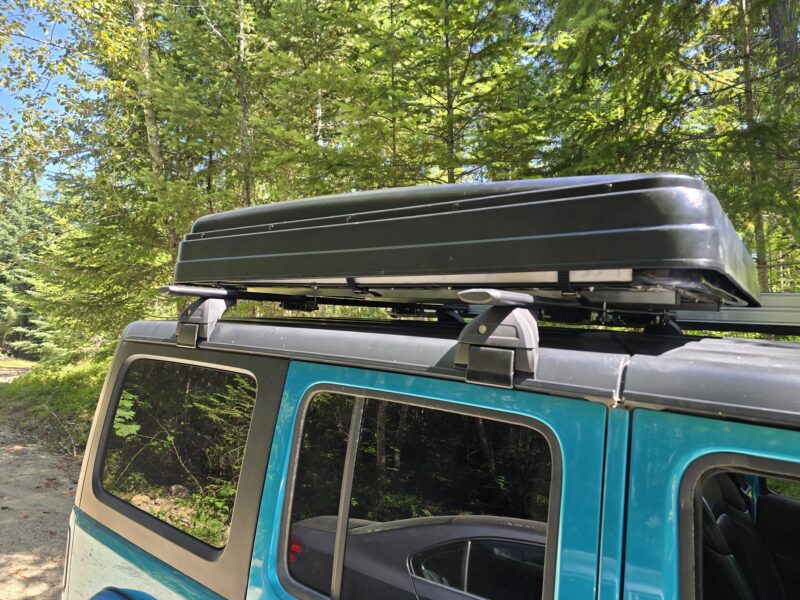
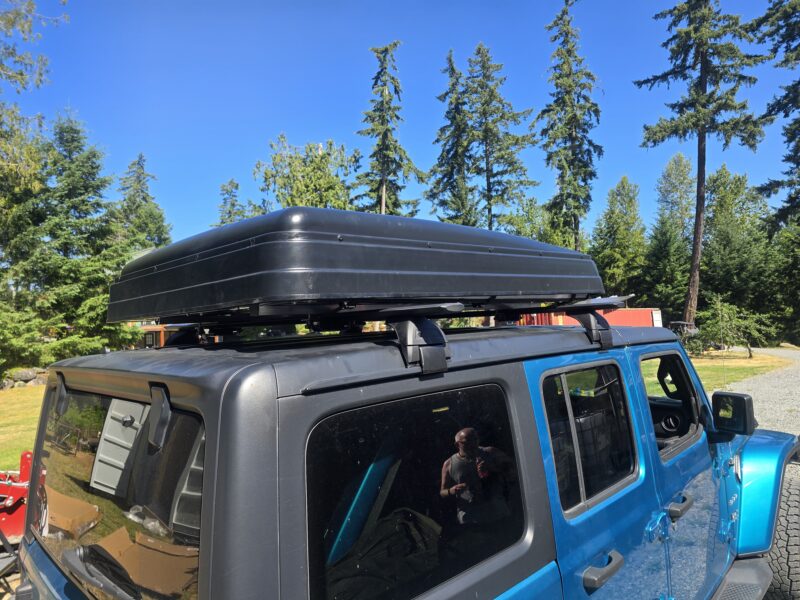
If your vehicle is a Jeep Wrangler or Gladiator, those use a separate gutter-mount system. We carry dedicated Jeep Gladiator/Wrangler Roof Rack Cross Bars (Round Ends) and Square Ends versions, plus a Jeep Roof Platform + Cross Bars Bundle if you want bars and a platform in one order.
Why Airfoil Design Matters
Every cross bar series we carry — ApexMount, TrailRail, and FlushRail — uses an airfoil aluminum profile rather than a plain square tube. Instead of a flat face pushing straight into oncoming air, the airfoil shape tapers front-to-back like a wing cross-section. That does three things for you on the highway:
- Cuts wind noise — less turbulent airflow off the leading edge means a quieter cabin at highway speed.
- Reduces drag — which matters for fuel economy, especially with a loaded roof box or platform up top.
- Keeps the load capacity high — the airfoil shape isn’t just about aerodynamics, it’s also a structurally efficient cross-section for carrying weight without flexing.
We’ll dig deeper into airfoil vs. square bar tradeoffs — including when a square bar actually makes more sense — in Part 2 of this series.
Don’t Forget the Platform
Cross bars are the foundation, but a lot of builds need more than two bars spanning the roof — especially if you’re running a rooftop tent, awning, or a full gear-hauling setup. That’s where a roof platform comes in: a flat aluminum tray that bolts onto your cross bars and gives you a continuous mounting surface instead of two skinny bars.
We carry both vehicle-specific and universal platforms:
- 2023+ Toyota Tundra Roof Platform Rack — $1,495 CAD
- Roof Platform for 2023+ Ford Ranger — $1,195 CAD
- Off-Road Roof Platform for Overlanding (Large, Universal) — $375 CAD
Browse the full lineup in our Roof Platform category.
The Bottom Line
Match your roof type first, then build out from there:
| Roof Type | Cross Bar System | Starting Price |
|---|---|---|
| Naked / Bare Roof | ApexMount™ Series | $329 CAD |
| Raised Side Rails | TrailRail™ Series | $329 CAD |
| Flush Rails | FlushRail™ Series | $295 CAD |
Still not sure which one fits your rig? Reach out to our team with your year, make, and model — we’ll point you to the right bars before you buy.