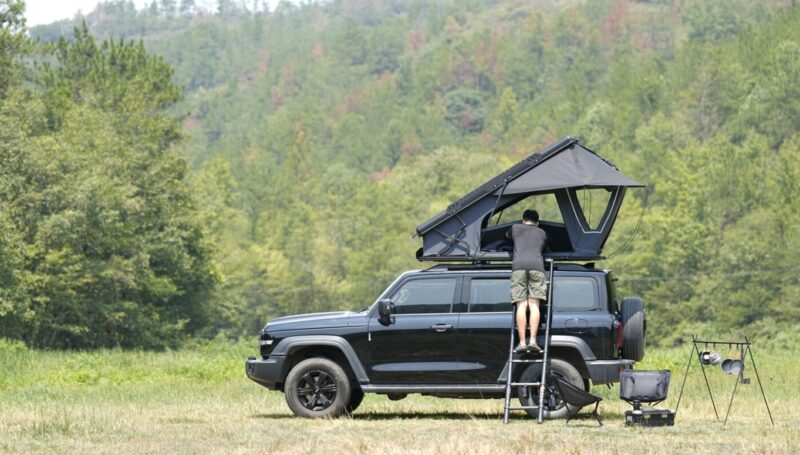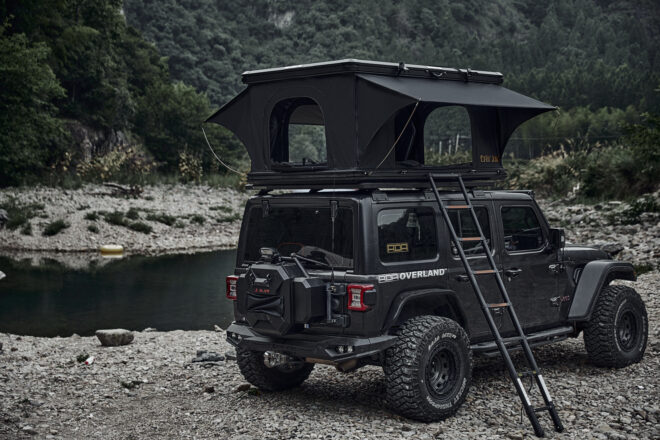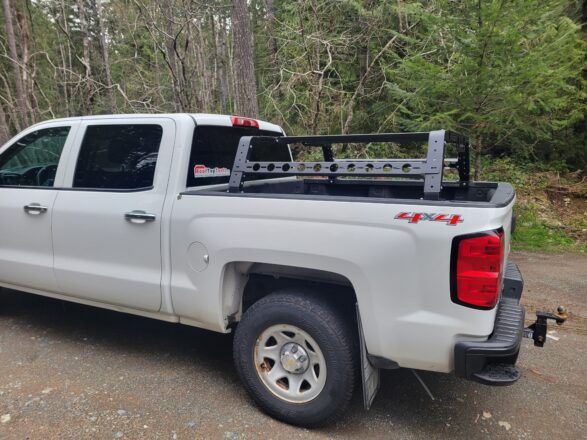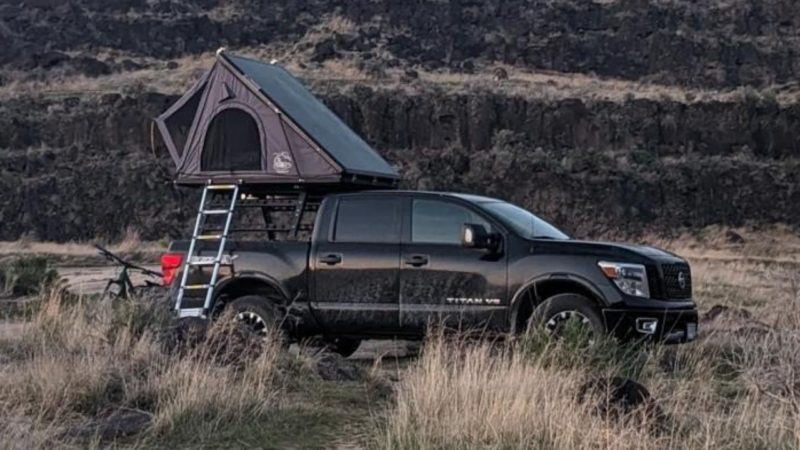

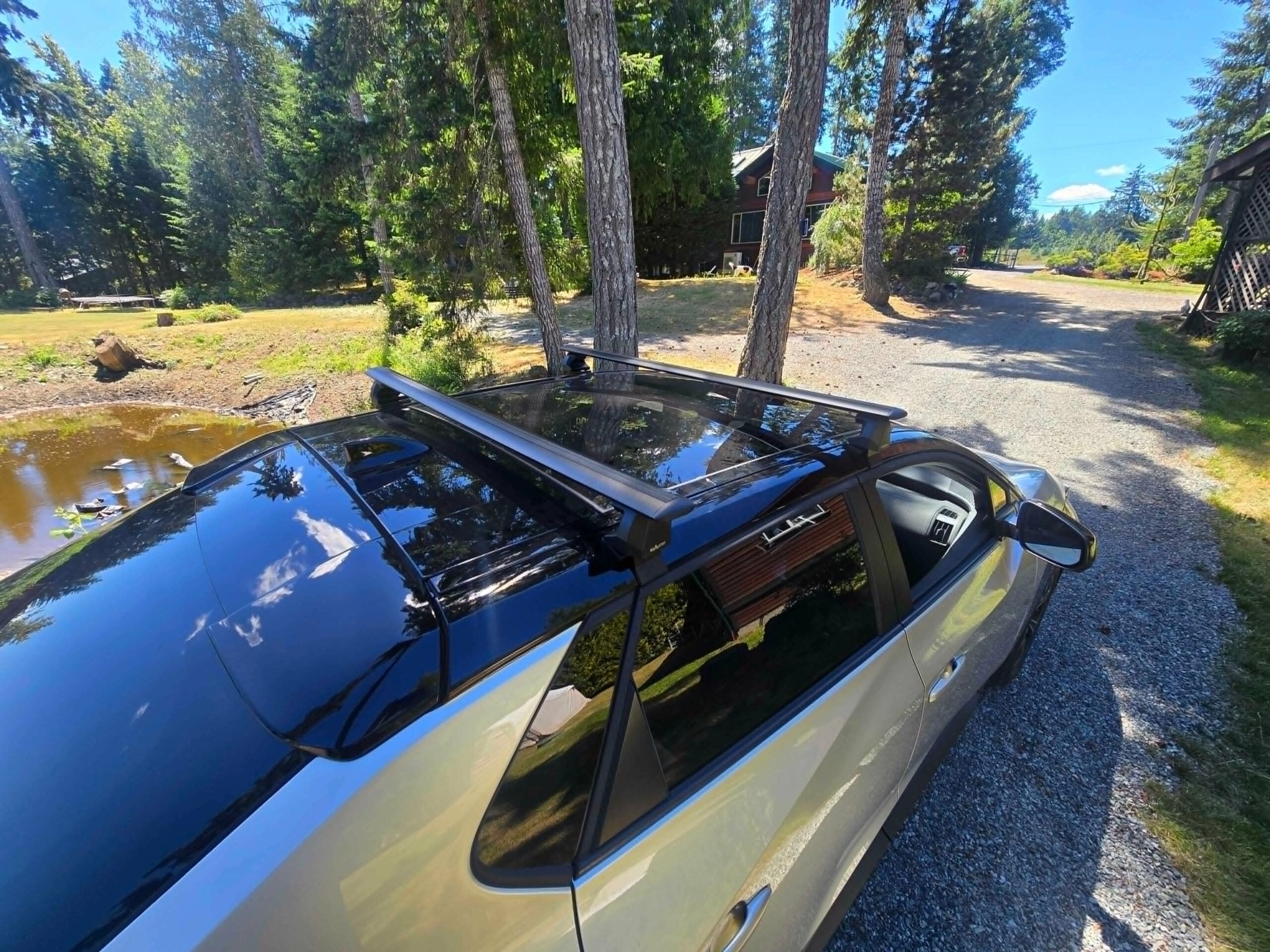
Once you’ve matched cross bars to your roof type — naked, raised rail, or flush rail (covered in Part 1 of this series) — the next decision is the bar profile itself: aerodynamic (airfoil) bars or traditional square bars. They look similar in photos, but they behave very differently once you’re loaded up and doing 110 km/h on the highway.
The Two Profiles
Square/traditional bars are exactly what they sound like — a flat-faced rectangular or round tube running across the roof. They’re simple, strong, and usually the most budget-friendly option. Our Adjustable Roof Crossbars 40–43″ (FlexFit) are a good example — black powder-coated aluminum, straightforward clamp-on design, starting at $45 CAD.
Aerodynamic (airfoil) bars use a tapered, wing-like cross-section instead of a flat face. Air moves over the leading edge instead of slamming into it. All three of our purpose-built roof systems — ApexMount™ (naked roof), TrailRail™ (raised rail), and FlushRail™ (flush rail) — use this airfoil profile.
So Which One Actually Matters?
It depends on how you use your vehicle.
Choose aerodynamic (airfoil) bars if:
- You drive highway distances regularly with something mounted up top (roof box, platform, rooftop tent)
- Wind noise at speed bothers you or your passengers
- You care about the fuel economy hit from a loaded roof — drag scales with speed, so this matters more on highway trips than city driving
- You’re running a rooftop tent or platform long-term, where the bars stay loaded for most of the season
A square/traditional bar can still make sense if:
- You only load up occasionally — bike rack on weekends, the odd cargo box for a trip
- Budget is the priority and you’re not doing sustained highway driving with a full roof load
- You want the simplest, most field-serviceable setup for remote use
Both styles carry real loads — the airfoil shape isn’t just cosmetic, it’s also a structurally efficient cross-section, so you’re not trading strength for quiet. You’re mainly trading price for refinement.
Dynamic vs. Static Load Ratings, Explained
Every cross bar set you look at will list two different weight numbers, and mixing them up is one of the most common (and most dangerous) mistakes people make when loading a roof.
Dynamic load rating is the maximum weight your cross bars can safely carry while the vehicle is moving. This number accounts for braking forces, cornering, potholes, and wind — all the stress that happens on the road. It’s almost always the lower of the two numbers.
Static load rating is the maximum weight your cross bars can support while the vehicle is parked and stationary — no motion, no road forces, just the weight sitting on top. Because there’s no driving stress involved, this number is significantly higher.
Here’s why that gap matters in practice, using two of our own products as an example:
- FlushRail™ Series: 75 kg (165 lb) dynamic / 200 kg (441 lb) static
- Universal Roof Cross Bar: 75 kg (165 lb) dynamic / 300 kg (661 lb) static
In both cases, you can park under a static-rated rooftop tent and have two people sleeping in it (well within the static number), but you’d never want to drive with that same weight up top — you’d blow past the dynamic rating immediately. This is also why rooftop tent manufacturers specify a maximum dynamic weight (the tent itself, while driving) separately from how much weight the platform can hold once you’re parked and the tent is deployed with people inside.
Rule of thumb: size your driving loads (roof boxes, bikes, kayaks) against the dynamic number, and size your parked loads (rooftop tents, awnings, camp setups) against the static number — and always check which number you’re looking at before you load up.
Can You Mount a Rooftop Tent on Factory Cross Bars?
Short answer: sometimes, but check the numbers before you buy.
Many factory-installed cross bars — the ones that come standard on SUVs and crossovers from the factory — are rated for modest dynamic loads (often 50–75 kg / 110–165 lb) and aren’t always rated for static loads at all, because they were never designed with a rooftop tent in mind. A folded rooftop tent typically weighs 35–80 kg depending on size and shell type, which can already eat up most of a factory bar’s dynamic rating before you’ve added a platform or mounting hardware.
Before mounting a tent on factory bars, confirm three things:
- The static load rating exists and covers tent + platform + occupants. If your factory bars don’t publish a static rating, don’t assume one — contact the manufacturer or treat it as unrated for parked use.
- The dynamic rating covers the tent’s travel weight, since that’s what applies while you’re driving to the campsite.
- The mounting points are rated for concentrated loads, not just evenly distributed cargo — a rooftop tent puts weight on a narrower footprint than a roof box.
If your factory bars don’t clear those checks — or you’re not confident they do — upgrading to a purpose-built system solves the problem outright. Our TrailRail™ and FlushRail™ bars are built with rooftop tents specifically in mind, and pairing them with a roof platform spreads the load across the full surface instead of two narrow bars — which is generally the safer, more stable way to run a tent regardless of which cross bars you choose. You can browse our full tent lineup in the Kermode Series Rooftop Tents collection.
The Bottom Line
| Aerodynamic (Airfoil) | Square / Traditional | |
| Wind noise | Lower | Higher |
| Highway fuel economy | Better with a load | Worse with a load |
| Price | Higher | Lower |
| Best for | Daily/highway use, rooftop tents, platforms | Occasional loads, budget builds |
If you’re building toward a rooftop tent, platform, or anything that stays mounted for the season, the airfoil bars pay for themselves in noise and fuel savings over a few road trips. If you’re hauling gear occasionally and want to keep costs down, a square bar will get the job done.
Not sure which load rating your planned setup needs? Send us your vehicle and gear list and we’ll confirm the right bars before you order.