
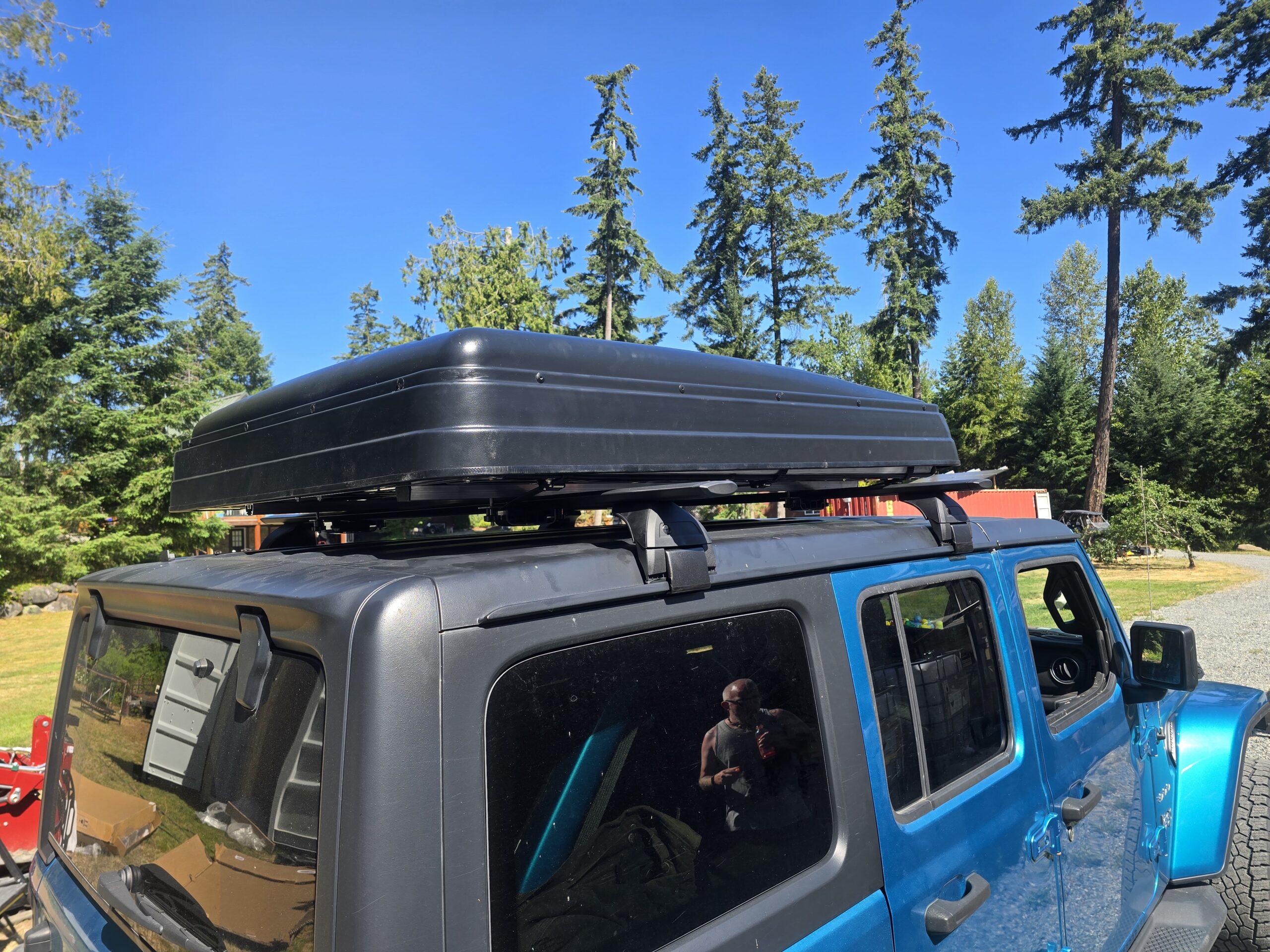
If your cross bars stay on year-round — and most do — they’re getting hit with a different kind of abuse every winter than they see in July. Road salt, slush, freeze-thaw cycles, and snow load all work on a roof rack in ways summer driving never does. This is the last piece of our three-part cross bar series, and it’s the one that determines whether your bars are still tight, quiet, and corrosion-free five winters from now.
What Winter Actually Does to a Roof Rack
Road salt is the big one. Provinces across Canada use a mix of rock salt and brine to keep highways clear, and that salt doesn’t stay on the road — it sprays up, settles into every crevice on your vehicle, and sits there until it’s rinsed off. On a roof rack, salt collects at clamp joints, mounting feet, and anywhere two metal surfaces meet. Left alone over a winter, that’s where corrosion starts.
Freeze-thaw cycling stresses every joint. Water gets into small gaps, freezes, expands, and pushes those gaps slightly wider. Do that dozens of times over a winter and clamps that were torqued down properly in October can loosen by March — which is exactly why a winter check of your mounting hardware matters as much as a fall one.
Snow load adds real weight you might not be accounting for. Wet, packed snow sitting on a roof box or platform after a storm can add tens of kilograms before you’ve even left the driveway. If you’re running a system close to its static rating in summer, winter snow accumulation can quietly push it past that line.
Why Material Matters More in Winter
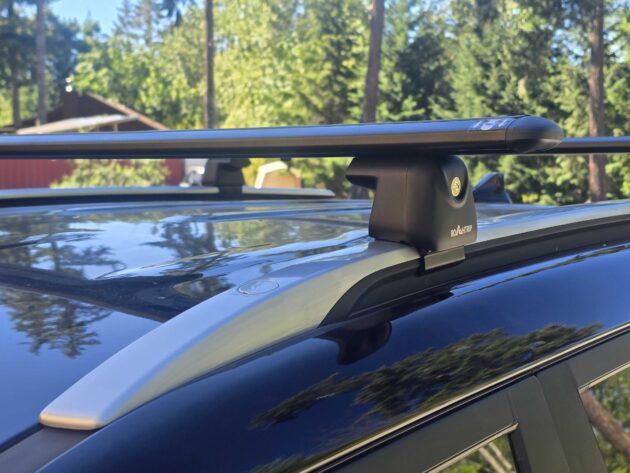
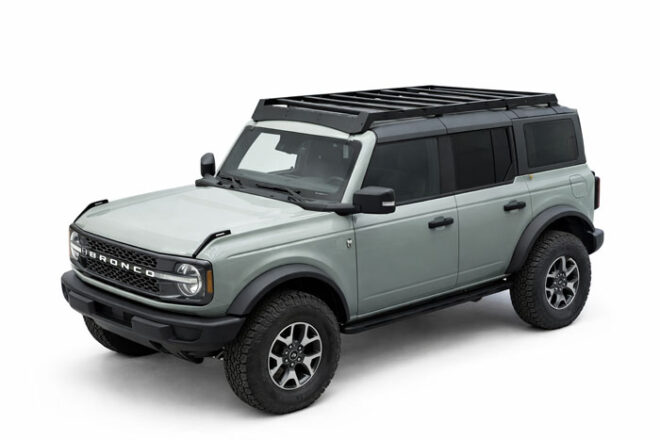
This is where aluminum earns its keep. All three of our roof systems — ApexMount™ (naked roof), TrailRail™ (raised rail), and FlushRail™ (flush rail) — use aluminum construction rather than bare steel. Aluminum naturally forms a thin oxide layer that protects it from further corrosion, where untreated steel rusts from the surface inward once the protective coating is scratched or worn through — and a scratched coating is exactly what road salt and winter grit cause over a season of use.
The TrailRail™ Series specifically adds a corrosion-resistant finish on top of the aluminum body, which matters most at the clamp points where salt spray collects and sits.
Winter Maintenance for Any Cross Bar System
Regardless of which bars you’re running, a few habits go a long way over a Canadian winter:
- Rinse the rack during car washes, not just the body. Most touchless and automatic washes don’t get up onto the roof properly — a quick hose-down of the bars and clamp points after a salty stretch of highway makes a real difference.
- Check clamp torque monthly through winter. Freeze-thaw cycling can loosen hardware that was snug in the fall. A quick hand-check before a long drive takes thirty seconds.
- Keep locking mechanisms moving. Dual-key locks (standard on our FlushRail™ and Universal Roof Cross Bar systems) can stiffen up in deep cold. A light silicone-based lubricant — not WD-40, which attracts grit — keeps them turning smoothly.
- Brush snow off before you load more on top. If you’re running a roof platform or cargo box, clear accumulated snow before adding gear so you’re not stacking your static load rating on top of unaccounted-for snow weight.
- Inspect mounting brackets at the start and end of the season. This matters most for naked-roof setups like ApexMount™, where the bracket-to-roof-frame connection is the only thing holding the system on.
Built for Vancouver Island to the Prairies
We’re a Nanaimo-based shop, which means our gear gets tested on the same wet-coast, salt-air conditions a lot of our customers deal with — and shipped to drivers dealing with prairie winters and salted highways across the rest of the country. Aluminum airfoil construction holds up to both: the coastal moisture and salt air of BC, and the deep cold and road salt of the Prairies and Ontario.
If you’re running a rooftop tent or platform through the winter, pairing your bars with a roof platform also helps — it spreads snow load across a full aluminum tray instead of concentrating it on two narrow bars, and keeps the mounting hardware higher off direct road spray.
The Bottom Line
| Winter Factor | What Helps |
| Road salt corrosion | Aluminum construction over bare steel |
| Freeze-thaw loosening | Monthly clamp torque checks |
| Frozen/stiff locks | Silicone lubricant, used regularly |
| Snow load creep | Clear snow before adding cargo; mind your static rating |
Cross bars aren’t a “set it and forget it” purchase if you’re keeping them on through a Canadian winter. The right material gets you most of the way there — aluminum airfoil bars like ApexMount™, TrailRail™, and FlushRail™ — and a quick monthly check covers the rest.
Not sure your current setup is winter-ready? Reach out to our team and we’ll help you figure out what needs attention before the salt starts flying.