
For tradespeople and contractors across Canada, a pickup truck isn’t just a vehicle — it’s a mobile office, a tool chest, and a job site in one. And for years, most of them made do with whatever protection they could get from a basic fiberglass cap, a tarp, or nothing at all.
That’s changing fast.
Aluminum truck canopies are becoming the standard choice for electricians, plumbers, carpenters, mechanics, and fleet operators who need secure storage, organized access, and a setup that holds up under the demands of daily commercial use. Rising tool theft, unpredictable Canadian weather, and the growing cost of replacing damaged equipment are pushing more and more tradespeople to make the switch — and most of them never look back.
This guide covers exactly why aluminum canopies have become essential for work trucks, which trades benefit most, and what features to look for when choosing the right setup for your rig.
Why Contractors Are Switching to Aluminum Canopies
The shift away from fiberglass caps and open truck beds isn’t a trend — it’s a practical response to real problems that tradespeople face every day.
Tool theft is a growing problem. A set of professional-grade power tools can represent thousands of dollars in equipment. An open truck bed, a soft tonneau cover, or a basic fiberglass cap with a cheap lock offers minimal deterrent to a determined thief. A properly built aluminum canopy with multi-point locking, reinforced doors, and no exposed hinges is a meaningfully different proposition.
Weather exposure destroys tools and materials. Rain, snow, condensation, and freezing temperatures damage electronics, corrode metal tools, warp timber, and ruin materials left in an unprotected or poorly sealed truck bed. Aluminum canopies are weather-sealed to keep the interior dry regardless of conditions — critical for anyone working in coastal BC, northern Canada, or anywhere that sees significant precipitation.
Organization saves time on the job. Time spent digging through a pile of tools in the back of a truck is time wasted on a job site. Aluminum canopies are fully customizable with interior shelving, drawer systems, and dividers that let you organize your tools exactly how you work, so everything has a place and you can find it in seconds.
Aluminum is lighter than steel, tougher than fiberglass. The strength-to-weight ratio of extruded aluminum means you get a canopy that handles serious loads without adding unnecessary weight to your truck. Unlike steel, it doesn’t rust. Unlike fiberglass, it doesn’t crack under point loads or repeated stress from tools and equipment being loaded and unloaded every day.
The lifespan justifies the investment. A quality aluminum canopy lasts the life of the truck — and often transfers to the next one. Fiberglass caps fade, crack, and degrade. Aluminum holds up. When it comes time to sell the truck or upgrade the fleet, an aluminum canopy retains its value in a way that fiberglass simply doesn’t.
Ideal Trades for Aluminum Truck Canopies
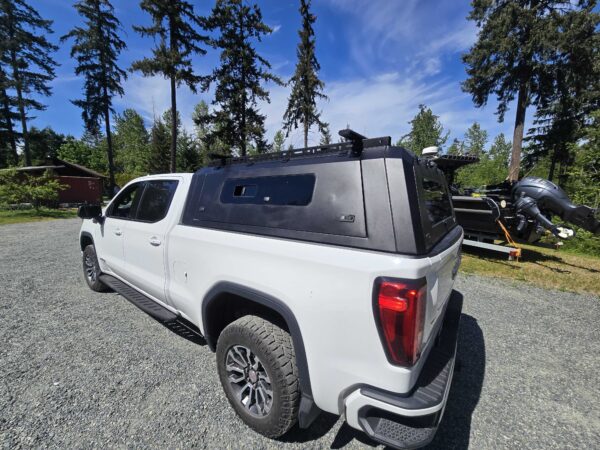
One of the reasons aluminum canopies have taken hold across so many industries is that they’re genuinely adaptable. The same core platform — lockable, weatherproof, load-rated aluminum construction — can be configured differently for every trade.
Electricians carry an enormous variety of tools, fittings, wire, conduit, and test equipment. An aluminum canopy with interior shelving, dedicated conduit holders, and a roof rack for ladders keeps everything organized and accessible. Electrical components are sensitive to moisture — a properly sealed canopy keeps them dry and functional.
Plumbers need fast access to a wide range of fittings, pipe, tools, and parts — often in tight timeframes when a customer has no running water. Gullwing side doors on an aluminum canopy allow full access to the entire bed from either side, so you’re not climbing into the back to find a fitting at the bottom of a pile.
Carpenters and construction crews carry heavy, awkward tools and materials including saws, levels, clamps, and sheet materials. A canopy with a high roof configuration, interior tie-down points, and a roof rack for lumber and sheet goods creates an organized, secure mobile workshop.
Mobile mechanics may be the single best use case for an aluminum canopy build. A properly fitted canopy with lockable drawer systems, a tool chest integration, an interior work light, and a side-opening door effectively turns the truck bed into a roadside workshop. Everything a mechanic needs for a service call is accessible, organized, and protected.
Forestry crews and resource road workers operate in some of the harshest conditions in the country — remote locations, rough roads, deep mud, and extreme weather. Aluminum canopies handle all of it. They don’t crack on washboard roads, they don’t absorb water, and they don’t fail when you need them most on a remote job site three hours from the nearest town.
Surveyors carry expensive, sensitive equipment including total stations, GPS units, drones, and data collectors. An aluminum canopy provides the secure, climate-stable environment that precision instruments require — far better than an open truck bed or a soft-sided solution.
Utility workers and municipal crews need quick access to equipment from multiple angles, often while wearing heavy gloves or PPE. Aluminum canopies can be configured with full rear-opening doors, side gullwings, and exterior lighting to make accessing tools fast and safe regardless of conditions.
Indigenous and community fleet vehicles operating in remote northern communities often travel significant distances on challenging roads between communities and job sites. The durability and low-maintenance nature of aluminum canopies makes them well-suited for fleet vehicles that need to work reliably without access to regular servicing or repairs.
Construction supervisors and project managers often split time between job sites and the office. An aluminum canopy keeps the truck presentable, keeps equipment secure between sites, and organizes documents, safety equipment, and tools in a way that a cluttered open bed simply can’t.
Key Features That Matter for Work Trucks
Not all aluminum canopies are configured the same way. For commercial and trade use, these are the features that make the biggest practical difference.
Gullwing side doors are one of the most valuable features for tradespeople. Full-length doors that swing up on each side of the canopy give you access to the entire bed width without climbing in — critical when you’re loading and unloading multiple times a day on a busy job site.
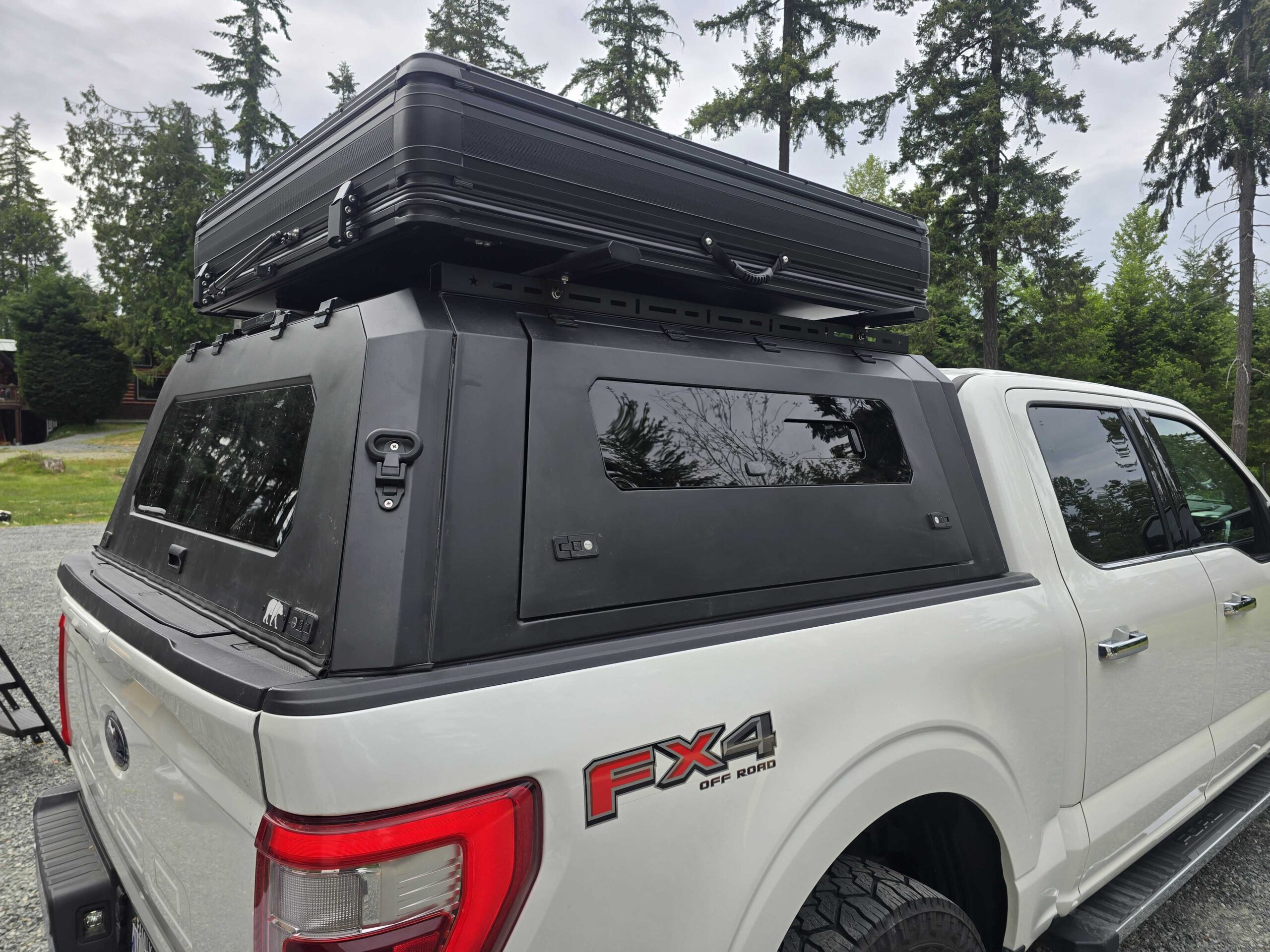
Roof rack systems allow you to carry ladders, lumber, pipe, and sheet goods on top of the canopy without consuming interior storage space. A load-rated roof rack integrated into the canopy structure is far more secure than aftermarket add-ons clamped to a fiberglass cap.
Ladder carrying is a daily requirement for many trades. A proper aluminum canopy roof rack with integrated ladder mounts and tie-down points makes securing a ladder safe, fast, and legal — and keeps it off the interior of the truck bed where it would otherwise displace tool storage.
Multi-point locking is the baseline for tool security. Quality aluminum canopies use recessed locking handles, reinforced door frames, and multi-point latch systems that make forced entry genuinely difficult. For tradespeople leaving tools in the truck overnight or at unsecured job sites, this matters.
Interior shelving and drawer systems transform the truck bed from a pile of tools into an organized workspace. Custom aluminum drawer systems, fixed shelving, and divider panels can be built to match exactly how you work — with the most frequently needed items at the front and less-used tools stored deeper.
Weather sealing is non-negotiable in Canadian conditions. A quality aluminum canopy seals against rain, snow, and condensation to keep the interior dry. This protects tools, electronics, and materials from weather damage and prevents the kind of rust and moisture damage that shortens the lifespan of expensive equipment.
Interior lighting makes a real difference early in the morning, late in the afternoon, or in covered parking. LED strip lighting inside the canopy keeps the work area visible when natural light isn’t available — a small detail that adds up over thousands of tool retrieval trips across a career.
Mobile workshop capability is the sum of all these features. When properly configured, an aluminum canopy turns a pickup truck into a self-contained mobile workshop — organized, secure, weatherproof, and ready to work the moment you arrive on site.
Aluminum Canopy vs Fiberglass Canopy for Work Trucks
The comparison between aluminum and fiberglass matters differently for work truck buyers than it does for recreational users. Commercial use involves daily loading and unloading, frequent door operation, heavy tool storage, and roof-mounted loads — all of which expose the limitations of fiberglass faster and more severely.
Weight: Fiberglass is slightly lighter. The difference is typically 15 to 20 kilograms on a comparable unit — meaningful but rarely a deciding factor for work truck buyers focused on durability and function.
Durability: Aluminum is significantly more durable under commercial use conditions. Fiberglass cracks under point loads from tools being loaded and unloaded. Aluminum dents but maintains structural integrity, and dents can often be straightened or panels replaced.
Rust resistance: Both materials resist rust — aluminum doesn’t rust, and fiberglass doesn’t corrode. However, the hardware, fasteners, and framing on a fiberglass cap are often steel, which will rust. Quality aluminum canopies use aluminum or stainless hardware throughout.
Roof load capacity: Aluminum is the clear winner. Fiberglass caps are not designed for significant roof loads — mounting a ladder rack, roof rack, or any substantial accessory on a fiberglass cap requires reinforcement and carries risk. Aluminum canopies carry manufacturer-rated roof loads that support full rack and ladder systems safely.
Repairability: Aluminum is easier to repair in the field. A damaged panel can be replaced. Dents can be straightened. Fiberglass repairs require specialized materials and skills, and color-matched finishes are difficult to replicate — particularly after years of weathering.
Commercial suitability: Aluminum is built for commercial use. Fiberglass caps were designed primarily for light recreational and utility use. The daily demands of a trade truck — repeated door cycles, heavy tools, rough roads, loading and unloading — are simply beyond what fiberglass handles well over a multi-year commercial lifespan.
Long-term cost: Fiberglass is cheaper upfront. Aluminum costs more to purchase but lasts longer, requires less maintenance, holds its resale value better, and transfers between trucks. Over a five-to-ten-year commercial ownership horizon, aluminum is typically the lower total cost option.
Why Aluminum Canopies Make Sense in Canada
Canada places unique demands on work truck equipment. The conditions that tradespeople and fleet operators face across British Columbia, the Prairies, Ontario, and the northern territories are genuinely extreme by global standards — and they expose the limitations of lesser canopy options quickly.
On Vancouver Island and coastal BC, persistent rain, salt air, and mild but damp winters create corrosion conditions that destroy unprotected steel hardware and degrade fiberglass finishes within a few years. Aluminum’s inherent corrosion resistance makes it the practical choice for anyone working in coastal conditions.
In northern BC, the Yukon, and across the northern Prairies, temperature extremes test materials at both ends of the scale. Fiberglass becomes brittle in deep cold and is prone to cracking when subjected to the kind of sudden temperature changes that occur when a cold truck is loaded with warm equipment. Aluminum handles temperature cycling without structural degradation.
On forestry roads, resource roads, and remote job sites, the vibration and shock loading from rough surfaces stress canopy frames and seals constantly. Aluminum frames flex and absorb these loads without cracking or losing their seal. A fiberglass cap on the same road will eventually crack at the seams or body mounts.
Road salt across central and eastern Canada is a persistent threat to any exposed steel. A fully aluminum canopy with stainless or aluminum hardware eliminates that concern entirely — the canopy will outlast the salt exposure without any protective coating maintenance.
For fleet operators running multiple vehicles across a wide geographic area, the low maintenance requirement and consistent durability of aluminum canopies simplifies fleet management significantly. There are no cracked caps to replace, no rusted hardware to address, and no weather-related failures that take a vehicle off the road unexpectedly.
The Bottom Line
For tradespeople and contractors across Canada, an aluminum truck canopy isn’t an accessory — it’s a business investment. It protects thousands of dollars in tools and equipment from theft and weather. It organizes your truck so you work faster and waste less time on every job. It carries the ladders, materials, and gear you need without compromise. And it does all of that reliably, day after day, year after year, in conditions that fiberglass and open beds simply can’t match.
The upfront cost is higher than a fiberglass cap. The return on that investment — in protected tools, recovered time, lower maintenance, and better resale value — makes it one of the most practical upgrades a working truck owner can make.
If your truck is a tool, it deserves to be equipped like one.
Kermode Overland is based in Nanaimo, BC, and supplies and installs aluminum truck canopies for tradespeople, contractors, and fleet operators across Vancouver Island. Get in touch to find the right canopy for your work truck.