
If you’ve started shopping for rooftop cargo storage, you’ve probably noticed two very different-looking products competing for the same space on your rig: the flat, slatted roof platform and the deep-walled roof basket. They both sit on your crossbars, they both carry gear, and they’re both marketed to overlanders — but they’re built for different jobs, and picking the wrong one means re-buying a few months later.
Here’s how to actually tell them apart.
If you’re comparing options for a rooftop tent or overland build, browsing available roof platforms can help clarify which mounting style best suits your vehicle and gear requirements.
What a Roof Platform Is Built For
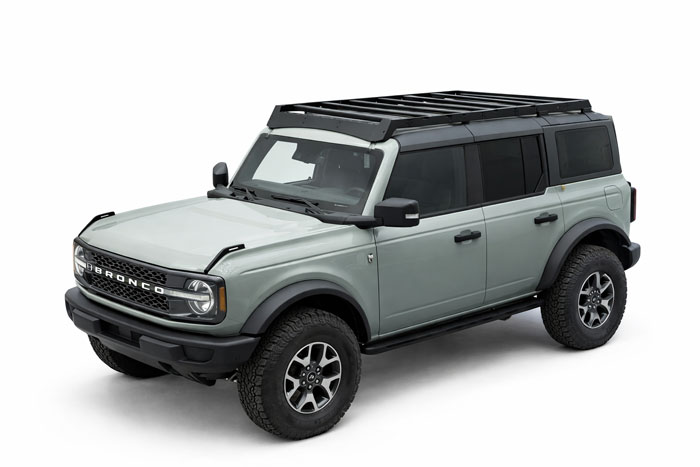
A roof platform is a flat, low-profile tray, usually aluminum, made up of slats or a perforated deck. It’s designed to be a foundation more than a cargo box. Think of it as the base layer that everything else gets mounted to.
Many overlanders choose a roof platform because it provides a versatile foundation for rooftop tents, awnings, solar panels, and other expedition accessories.
Where platforms win:
Rooftop tent compatibility. Most hard-shell and soft-shell RTTs are designed to bolt straight onto a flat platform. The slatted design also lets airflow circulate under the tent floor, which matters for condensation control in humid climates.
Modularity. Awnings, traction boards, solar panels, and fuel canisters can all be side-mounted or surface-mounted to a platform without fighting a wall in the way.
Lower wind drag. A flat platform sits closer to your roofline and doesn’t create the scoop effect a basket’s walls produce, which translates to better fuel economy on long highway stretches.
Weight distribution. Platforms spread load evenly across the whole deck rather than concentrating it, which is a real consideration when you’re already carrying a tent, awning, and recovery gear up top.
Where platforms fall short:
Loose or irregularly shaped gear (camp chairs, dry bags, firewood) can shift or slide without a basket’s walls to contain it.
You’ll typically pay more per square foot than a comparable basket.
What a Roof Basket Is Built For
A roof basket is the wire-mesh or solid-wall cargo cage you’ve seen on every overland build since the genre existed. It’s built to contain bulk gear, not necessarily to support a tent.
Where baskets win:
Raw gear hauling. If your trips are about moving volume — coolers, jerry cans, dry bags, camp kitchen totes — a basket’s walls keep everything from migrating in transit.
Price per liter of storage. Baskets are generally the more affordable way to add rooftop cargo capacity.
Tie-down points. Most baskets come with built-in mesh or rail points along the walls, so you’re not improvising lashing points with ratchet straps.
Where baskets fall short:
RTT mounting is a workaround, not a feature. You can mount a rooftop tent to a basket, but you’re usually adding a plywood or aluminum base panel first, which adds weight and cost and partially defeats the basket’s purpose.
Wind noise and drag. The open walls catch air at speed, and at highway speeds that’s audible and measurable at the pump.
Awnings and solar panels mount less cleanly — you’re working around wall height rather than a flat deck.
The Real-World Use Case Split
This is where the decision actually gets made, and it comes down to one question: are you building a sleep system, or are you hauling gear?
The RTT + Platform Combo Build
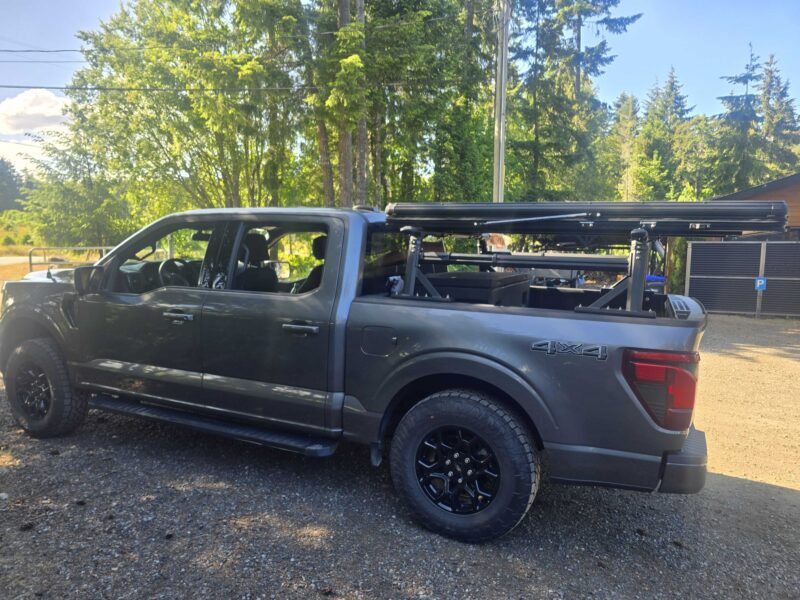
If your rig is set up for a rooftop tent, an annex, and an awning, a platform isn’t optional — it’s the structural piece the rest of your setup depends on. Owners running this combo typically add side-mount solar panels to the platform’s rails and run an awning off the platform’s edge channel, turning the roof into one connected basecamp system rather than a stack of separate accessories.
A dedicated roof platform creates a stable mounting surface that allows these accessories to work together as a complete overland system.
The Gear-Hauling Build
If you’re not sleeping on the roof and your priority is moving volume — overland racing support, expedition resupply runs, family road trips with way too much stuff — a basket is the more efficient dollar-for-dollar choice. You get more usable containment per dollar, and you’re not paying for slatted-deck engineering you don’t need.
The Hybrid Build
A growing number of builds run both: a platform up front for the RTT and awning mount, with a smaller basket further back (or on a hitch-mounted extension) for loose gear. If your roof has the length and your roof weight rating allows it, this is genuinely the best of both — just confirm your dynamic roof load rating before stacking systems, since RTTs already eat into that number fast.
Compatibility Checklist Before You Buy
Before adding either to cart, confirm:
Crossbar spacing matches your platform or basket’s mounting hardware (most are adjustable, but verify before ordering).
Static vs. dynamic roof load rating for your vehicle — this is the number that actually limits what you can run on the move, not just what your roof can hold parked.
RTT weight + occupant weight if you’re going the platform route — this is the number most people forget to add to the math.
Awning bracket compatibility — platform edge channels and basket rail systems aren’t always interchangeable between brands.
FAQ
Can I mount a rooftop tent on a roof basket?
Yes, but you’ll need to add a flat base panel — usually plywood or aluminum — across the basket first. It works, but it adds weight and cost, and most owners who plan to run an RTT long-term end up switching to a purpose-built platform instead.
Does a roof platform actually save fuel compared to a basket?
The flat profile produces less wind drag than an open basket’s walls, which shows up as less wind noise and a measurable difference in fuel consumption on long highway drives. The savings are modest per trip but add up over a season of road tripping.
Can I run a platform and a basket on the same vehicle?
Yes, many hybrid builds do — a platform toward the front for the RTT and awning, a smaller basket further back for loose gear. Just check your vehicle’s dynamic roof load rating before stacking both, since tents and occupant weight already use up most of that number.
What’s the real difference in cost between a platform and a basket?
Platforms generally cost more per square foot due to the engineering needed to support a tent and accessories. Baskets are usually the more budget-friendly way to add raw cargo volume if you’re not mounting a sleep system on top.
Heading Out to Upgrade Your Roof Setup?
There’s no universally “better” option here — there’s only the one that matches what’s actually going on top of your vehicle. If a rooftop tent, awning, and solar setup are the plan, a platform is the foundation that setup is built on. If you’re hauling bulk gear and skipping the rooftop sleep system, a basket gets you more storage for less money. And if you’re running both, plan your roof real estate and load ratings before you buy either one — not after.
Ready to build a rooftop tent, awning, or solar-equipped overland setup?
Explore our collection of roof platforms designed to support adventure-ready gear and maximize your roof space.