

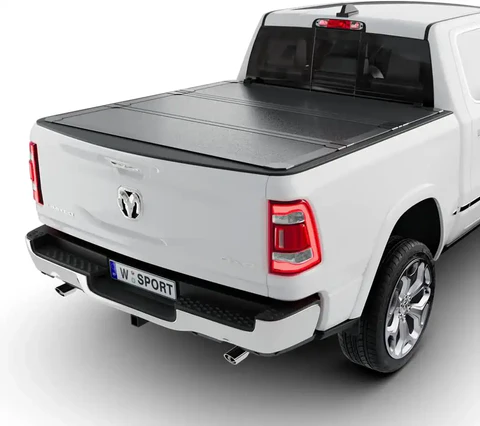
A tonneau cover is one of those upgrades that sounds simple until you start actually shopping for one and realize there are five different styles, three material categories, and a dozen brands all claiming theirs is the toughest. If you’re using your truck for overlanding rather than just commuting, the stakes are higher too — your bed is your gear closet, your kitchen storage, and sometimes your theft risk all in one space.
Here’s what actually matters when you’re choosing a cover that has to survive washboard roads, dust, and the occasional opportunistic stranger at a trailhead parking lot.
If you’re still comparing styles, browse our selection of tonneau covers to see the differences between hard and soft cover options available for your truck.
Hard Covers: Built for Abuse, at a Cost
Hard tonneau covers — whether folding, retractable, or one-piece — are typically aluminum or composite panels. They’re the closest thing to “armor” you can put over a truck bed.
Many overlanders choose hard tonneau covers for their combination of security, weather resistance, and load-carrying capability.
Why overlanders choose hard covers:
Security. A locking hard cover is genuinely difficult to defeat without tools and time, which matters if you’re storing recovery gear, electronics, or a fridge in the bed overnight at a trailhead or campsite.
Load-bearing capability. Many hard covers can support real weight on top — a rooftop tent, cargo box, or even a second basket — which soft covers simply can’t do.
Weatherproofing. Solid panels seal tighter against dust intrusion than fabric, which matters a lot more on washboard gravel roads than it does on pavement. Fine dust finds every gap, and soft covers have more gaps to find.
The tradeoffs:
Price. Hard covers cost meaningfully more than soft alternatives, often two to three times as much for a comparable bed length.
Bed access. Folding and retractable styles solve this better than one-piece designs, but you’re still generally dealing with a less spontaneous “just reach in and grab it” experience than a soft roll-up.
Weight. Hard covers add more weight to your payload than fabric, which is worth factoring in if you’re already running close to your truck’s GVWR with camping gear, water, and recovery equipment.
Soft Covers: Lighter, Cheaper, More Vulnerable
Soft covers — roll-up, folding, or snap-on vinyl — are the budget-friendly, lightweight option, and they’re genuinely fine for a lot of use cases. They’re just not the overlanding-specific answer in most cases.
Where soft covers make sense:
You’re not storing high-value gear unattended.
Weight savings matter more to you than max security.
You want the cheapest functional cover and don’t need it to bear load on top.
Where soft covers struggle off-road:
Dust intrusion. Fabric seams and snap closures aren’t airtight, and washboard roads generate enough fine dust to find every gap over a multi-day trip.
Theft risk. A vinyl cover is cut open with a pocketknife in seconds. If you’re parking at trailheads or in unfamiliar areas overnight, this is a real consideration, not a hypothetical one.
No load capacity. You can’t mount a rooftop tent, cargo basket, or anything else on top of a soft cover — it’s purely a bed cover, not a structural surface.
The Question That Actually Decides It: What’s Going in Your Bed?
If your bed is doing double duty as a drawer system base, a fridge slide mount, or storage for recovery gear and tools, security and weatherproofing stop being nice-to-haves. A hard cover is the more honest investment for that use case, even at the higher price point.
If your bed is mostly empty during travel and you’re just keeping rain and dust off a duffel bag and some folding chairs, a soft cover does the job for a fraction of the cost.
Compatibility With Bed Systems and Roof Setups
This is where a lot of buyers get caught off guard after the purchase:
Drawer systems and bed racks often need specific clearance heights, and not every tonneau cover style clears a drawer system’s top rail. Check clearance specs before buying either component.
Bed racks for awnings or traction boards frequently require a hard cover (or no cover at all) since they mount to bed rail systems that soft covers can’t support.
When planning a complete truck build, it’s worth reviewing tonneau cover options that are compatible with bed racks, drawer systems, and other overland accessories.
If you’re also running a roof platform or basket setup, a hard tonneau cover rounds out the security picture — there’s limited benefit to locking down your roof rack accessories if your bed contents are protected by something a multitool can defeat in ten seconds.
What to Check Before You Buy
Locking mechanism — tailgate-integrated locks are harder to defeat than simple latch-style locks.
Load rating if you plan to mount anything on top — not all hard covers are rated equally, and exceeding the rating risks both your gear and the cover itself.
Bed rail compatibility — confirm the cover doesn’t conflict with any existing or planned bed rack, drawer system, or tie-down rail.
Seal quality, not just material — a hard cover with a poor weather seal can underperform a high-quality soft cover in dust resistance. Read seal-specific reviews, not just material-type comparisons.
FAQ
Will a soft tonneau cover survive washboard or gravel roads?
It will function, but seams and snap closures tend to loosen gradually under sustained vibration, and fine dust finds those gaps over a multi-day trip. A hard cover holds its seal more consistently because there’s less to vibrate loose.
Can I mount a rooftop tent or cargo basket on top of a tonneau cover?
Only on certain hard covers rated for static load. Soft covers have no load-bearing capacity and aren’t designed to support weight on top under any circumstances.
How much harder is it to break into a locking hard tonneau cover versus a soft one?
A tailgate-integrated locking hard cover takes real tools and time to defeat. A soft vinyl cover offers minimal resistance — a pocketknife through the fabric takes seconds regardless of how good the latch is.
Do tonneau covers work with bed racks and drawer systems?
It depends on clearance and rail compatibility, which varies by brand and style. Bed racks for awnings or traction boards often need a hard cover or no cover at all, and drawer systems can be blocked by covers that don’t clear the top rail — always check specs for both pieces before buying.
Ready to Lock Down Your Bed Storage?
For genuine overland use — multi-day trips, gravel and washboard roads, unattended parking at trailheads — a hard cover is almost always the better long-term investment, particularly if you need load-bearing capacity or you’re storing anything worth protecting. Soft covers still have a place for lighter use cases and tighter budgets, but go in knowing exactly what you’re trading away in security and dust protection to save the money.
Explore our collection of tonneau covers designed for overland travel, gear protection, and all-weather performance.